
What's Happening?
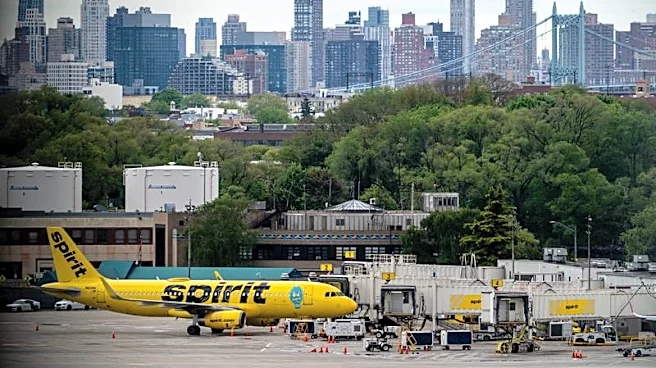
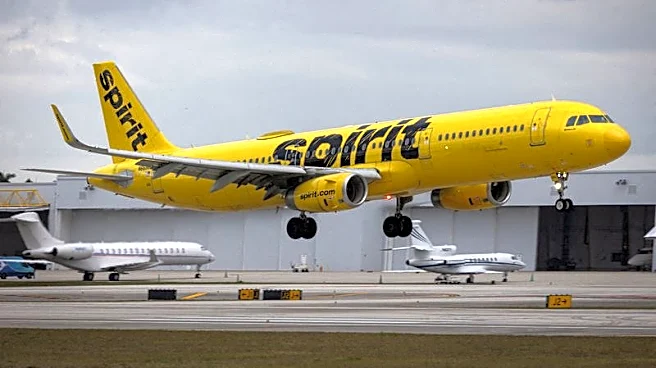
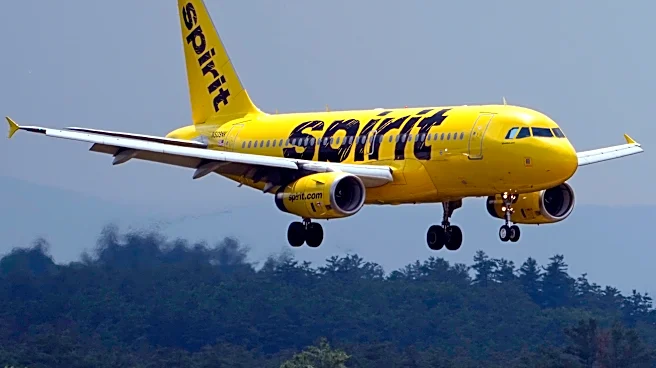
U.S. Transportation Secretary Sean Duffy announced that the government does not plan to bail out low-cost airlines seeking $2.5 billion in relief due to high jet fuel prices. This decision follows the collapse
of Spirit Airlines and a proposal from budget carriers like Frontier and Avelo to exchange warrants for government assistance. The Association of Value Airlines requested the creation of a liquidity pool to stabilize operations and keep airfares affordable. They also asked Congress to suspend certain federal taxes on airline tickets to offset increased fuel costs. Duffy emphasized that airlines should seek private market solutions rather than government intervention.
Why It's Important?
The refusal to provide a bailout highlights the government's stance on market-driven solutions over direct intervention. This decision could impact the financial stability of budget airlines, potentially leading to higher airfares and reduced competition. Major airlines oppose the bailout, arguing it would unfairly benefit those not making tough financial decisions. The situation underscores the broader economic challenges posed by geopolitical tensions affecting fuel prices, which could lead to increased operational costs and financial strain across the airline industry.
What's Next?
Budget airlines may need to explore alternative financial strategies, such as cost-cutting measures or seeking private investment, to manage the increased fuel costs. The ongoing geopolitical situation could further influence fuel prices, prompting airlines to adjust their operational strategies. Congress's response to the tax suspension request will be crucial in determining the financial relief available to these carriers.