



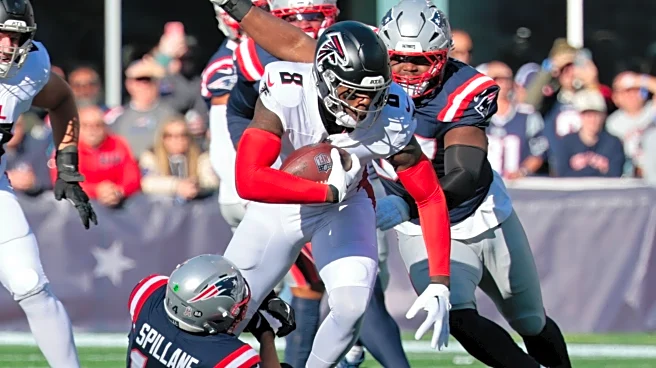
What's Happening?
The Atlanta Falcons are reportedly planning to apply the franchise tag to their tight end, Kyle Pitts. This decision comes as Pitts enters the final year of his rookie contract without an extension. The franchise tag for tight ends in 2026 is projected to be around $16 million, calculated by averaging the top five salaries at the position. Pitts, who was a first-round pick in 2021, has accumulated $43.9 million in career earnings. Despite a strong rookie season with 1,026 receiving yards, Pitts has not surpassed the 1,000-yard mark since. In 2025, he recorded 88 catches for 928 yards and five touchdowns, marking his most productive season since his rookie year. The Falcons have until March 3 to apply the franchise tag, and Pitts will have until July
15 to negotiate a long-term deal, or he will play under the tag for the 2026 season.
Why It's Important?
The decision to franchise tag Kyle Pitts highlights the Falcons' commitment to retaining a key player despite his inconsistent performance in recent years. Pitts' situation underscores the challenges teams face in managing salary caps while trying to secure top talent. The franchise tag allows the Falcons to keep Pitts for another year without committing to a long-term contract, providing flexibility in their roster management. For Pitts, playing under the franchise tag could be a double-edged sword, offering a significant salary but also delaying long-term financial security. This move could impact the Falcons' future salary cap and their ability to sign other players, as well as set a precedent for how they handle contract negotiations with other key players.
What's Next?
The Falcons and Kyle Pitts have until July 15 to negotiate a long-term contract. If no agreement is reached, Pitts will play the 2026 season under the franchise tag. This period will be crucial for both parties to assess Pitts' value and potential contributions to the team. The outcome of these negotiations could influence the Falcons' strategy in the upcoming NFL Draft and free agency, as they balance their roster needs with salary cap constraints. Additionally, other teams will be watching closely, as Pitts' situation could affect the market for tight ends and influence how other franchises approach contract negotiations with their players.