







What's Happening?
In 2025, China's electric vehicle (EV) market significantly outpaced that of the United States, with China selling more plugin vehicles than the total number of vehicles sold in the U.S. According to recent data, China produced 34.4 million vehicles,
including both passenger and commercial types, while the U.S. produced 10.6 million. Of these, China sold 16.49 million plugin vehicles domestically and abroad, with 12.8 million sold within China itself. In contrast, the U.S. saw only about 1.5 million domestic plugin vehicle sales out of a total of 16.38 million vehicles sold. This disparity highlights China's dominance in the EV sector, where plugin vehicles accounted for 48% of new vehicle sales in China, marking a 28% growth from the previous year.
Why It's Important?
The stark contrast in EV sales between China and the U.S. underscores a significant shift in the global automotive industry, with China emerging as a leader in the transition to electric mobility. This trend has implications for U.S. automakers and policymakers, as the U.S. lags in adopting the latest automotive technologies. The growth of China's EV market could influence global supply chains, investment in EV infrastructure, and the competitive landscape for automakers. For the U.S., this could mean a need to accelerate innovation and policy support to catch up with international competitors, potentially affecting jobs, economic growth, and environmental goals.
What's Next?
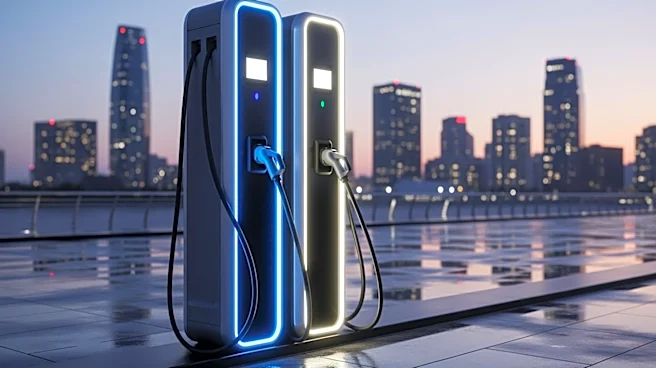
As China continues to expand its EV market, the U.S. may face increased pressure to enhance its own EV infrastructure and production capabilities. This could involve increased investment in charging networks, incentives for EV purchases, and support for domestic manufacturing. U.S. automakers might need to innovate more rapidly to compete globally, potentially leading to partnerships or collaborations with international firms. Policymakers could also consider regulatory changes to encourage EV adoption and reduce reliance on fossil fuels, aligning with broader environmental and economic objectives.