

What's Happening?
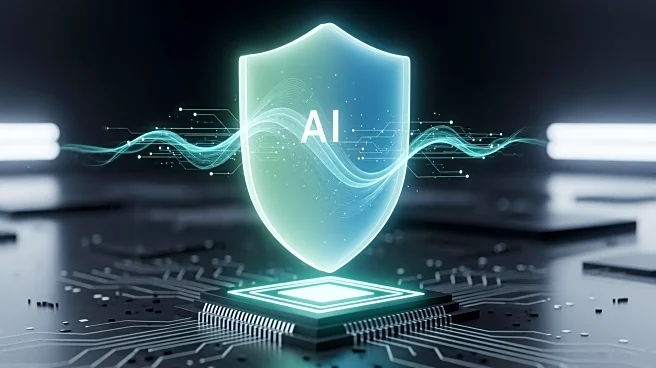
Cybersecurity firms are increasingly adopting AI agents to manage cyber threats and alleviate the workload of human analysts. Companies like Huntress have implemented AI agents in their security operations centers to automate threat detection processes.
These agents are capable of identifying suspicious activities, such as unusual login attempts, and delegating tasks to sub-agents for further analysis. This automation has significantly reduced the time required for investigations, cutting down the workload by 90% for a substantial portion of cases. Despite these advancements, AI agents still require human oversight for complex tasks and high-risk decisions. The technology is primarily effective in handling repetitive tasks but struggles with intricate threats like ransomware attacks.
Why It's Important?
The integration of AI agents in cybersecurity is crucial as it addresses the growing complexity of cyber threats and the shortage of qualified analysts. By automating routine tasks, AI agents allow human analysts to focus on more complex issues, potentially increasing the overall efficiency of cybersecurity operations. This shift not only enhances threat detection capabilities but also offers economic benefits. For instance, AI agents can perform the workload of multiple full-time employees at a fraction of the cost, leading to significant savings for companies. However, the reliance on AI also raises concerns about job displacement and the need for continuous human oversight to ensure the accuracy and reliability of AI-driven processes.
What's Next?
As AI technology continues to evolve, cybersecurity firms are likely to expand the use of AI agents to cover more complex tasks. This could lead to a transformation in the roles of human analysts, who may transition into more specialized positions such as engineers or quality assurance specialists. Companies may also adjust their hiring strategies, potentially reducing the recruitment of entry-level staff as AI agents take on more responsibilities. The ongoing development of AI capabilities will be crucial in determining the future landscape of cybersecurity operations and the balance between human and machine roles.