
What's Happening?
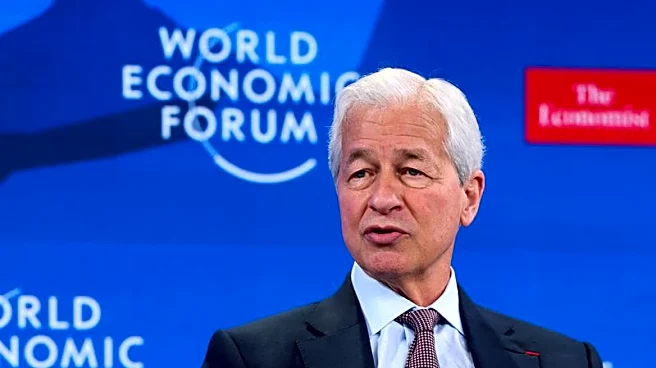
JPMorgan Chase CEO Jamie Dimon announced that the company will likely continue reducing its workforce in New York City while expanding in other locations. In a letter to shareholders, Dimon cited New York City's
corporate taxes as a factor making the firm less profitable and competitive compared to other states like Texas. Over the past decade, JPMorgan Chase has decreased its New York City headcount from 30,000 to 24,000, while increasing its Texas workforce from 26,000 to 32,000. New York City Mayor Zohran Mamdani has defended the city's corporate taxes, arguing they are necessary to bridge budget gaps and avoid raising property taxes.
Why It's Important?
The decision by JPMorgan Chase to reduce its New York City workforce highlights the impact of corporate tax policies on business operations and employment. As companies seek more favorable tax environments, states like Texas may benefit from increased business activity and job creation. This shift could influence other corporations to reconsider their location strategies, potentially affecting local economies and employment rates. The move also underscores the ongoing debate over corporate taxation and its role in economic competitiveness and fiscal policy.
What's Next?
As JPMorgan Chase continues to adjust its workforce distribution, other financial institutions may follow suit, seeking more favorable tax conditions. This could lead to increased pressure on New York City to reconsider its corporate tax policies to retain businesses and jobs. Additionally, the trend may prompt discussions among policymakers about balancing tax revenue needs with economic competitiveness. Stakeholders, including local governments and business leaders, will likely engage in dialogue to address these challenges and explore potential solutions.