

What's Happening?
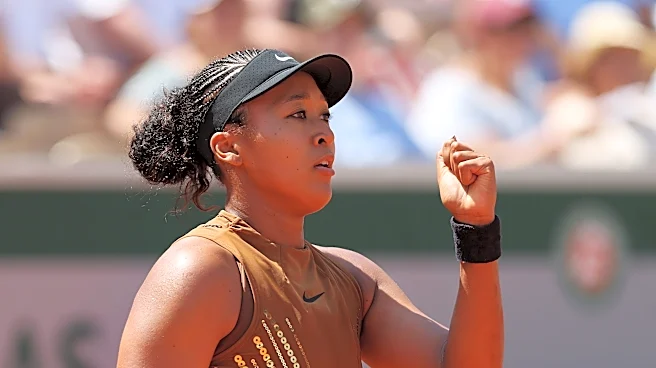
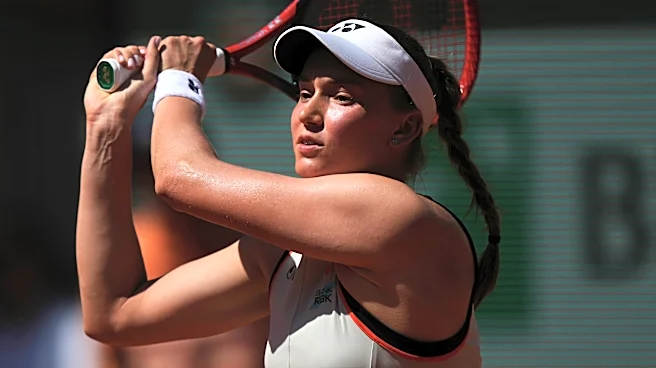
American tennis player Amanda Anisimova, seeded sixth in the women's draw, was defeated by unranked Diane Parry in the third round of the French Open. The match, held at Roland Garros, saw Parry leveraging the support of her home crowd to take the first
set 6-3. Anisimova fought back in the second set, winning 6-4, which forced a decisive third set. Despite leading 5-4 in the final set, Anisimova was unable to capitalize on her advantage, allowing Parry to tie the set and eventually push it into a tiebreaker. Parry dominated the tiebreaker, winning 10-3, and secured her place in the fourth round for the first time in her career. She is set to face Maja Chwalinska in the next round.
Why It's Important?
Anisimova's early exit is part of a broader trend of upsets at this year's French Open, where several top-seeded players have been eliminated in the initial rounds. This includes notable names like Jessica Pegula, Elena Rybakina, and Novak Djokovic. Such unexpected outcomes can significantly alter the dynamics of the tournament, opening opportunities for lower-ranked players to advance further than anticipated. For Anisimova, this loss represents a missed opportunity to capitalize on her high seeding and potentially advance to the later stages of the tournament. The pattern of upsets also highlights the unpredictable nature of the competition, which can impact player rankings and future seedings.
What's Next?
Diane Parry will advance to the fourth round, where she will compete against Maja Chwalinska for a spot in the quarterfinals. For Anisimova, the focus will likely shift to preparing for upcoming tournaments, analyzing her performance, and addressing any weaknesses exposed during the match. The tournament will continue to unfold with the potential for more surprises, as lower-ranked players seek to capitalize on the absence of top seeds. The outcomes of these matches could influence the landscape of women's tennis, affecting player confidence and strategies in future competitions.