



What's Happening?
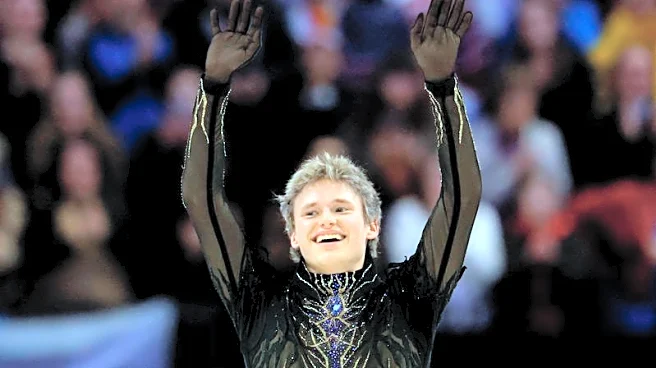
Ilia Malinin, a 21-year-old American figure skater, has won his third consecutive world figure skating championship. This victory comes as a significant redemption after his disappointing performance at the Winter Olympics, where he finished eighth. Malinin, known
as the 'Quad God' for his exceptional jumping skills, delivered a flawless free skate at the O2 Arena in Prague. He executed five quadruple jumps and a backflip, earning 218.11 points in the free program and 329.40 points overall. This performance placed him comfortably ahead of his Japanese competitors, Yuma Kagiyama and Shun Sato, who finished second and third, respectively. Malinin's achievement marks him as the first skater to win three consecutive men's world titles since Nathan Chen.
Why It's Important?
Malinin's victory is significant as it highlights his resilience and ability to overcome setbacks. His performance not only restores his reputation after the Olympic disappointment but also reinforces the United States' prominence in the figure skating world. This achievement could inspire young skaters and boost interest in the sport domestically. Additionally, Malinin's success may influence the competitive landscape, encouraging other skaters to push the boundaries of technical difficulty in their routines. His ability to perform under pressure and deliver a flawless routine could set a new standard for future competitions.
What's Next?
Following this victory, Malinin is likely to focus on maintaining his competitive edge and preparing for future championships. His performance may prompt other skaters to enhance their technical skills to remain competitive. The figure skating community will be watching to see if Malinin can continue his winning streak and possibly break more records. Additionally, his success may lead to increased media attention and sponsorship opportunities, further elevating his profile in the sports world.
Beyond the Headlines
Malinin's journey underscores the psychological challenges athletes face, particularly in high-pressure environments like the Olympics. His ability to rebound from a significant setback highlights the importance of mental resilience in sports. This aspect of his story may lead to broader discussions about mental health support for athletes. Furthermore, his success could influence the cultural perception of figure skating, potentially attracting a more diverse audience and encouraging greater participation across different demographics.