

What's Happening?
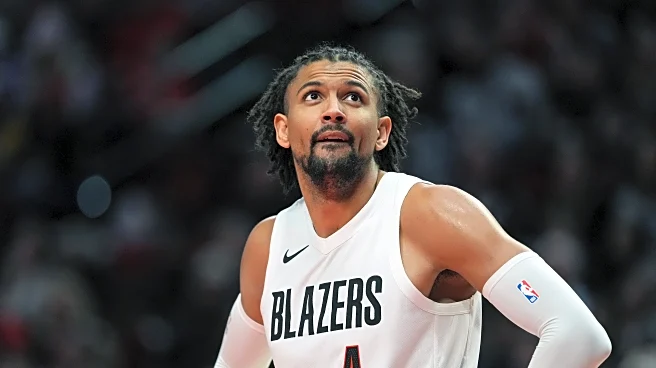
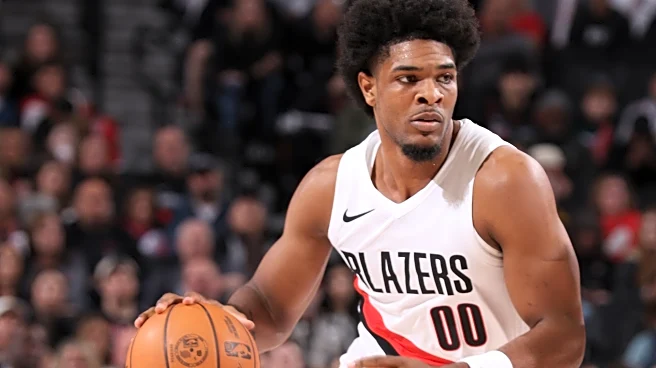
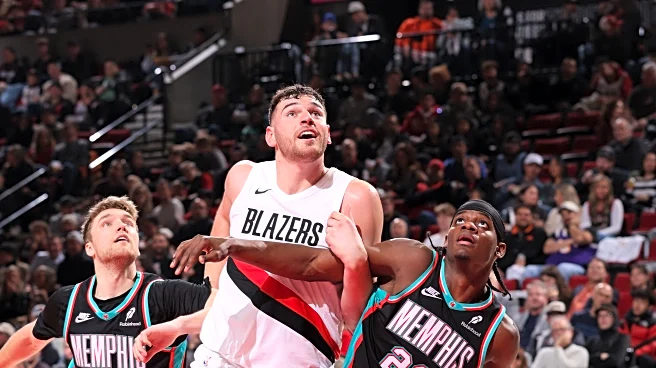
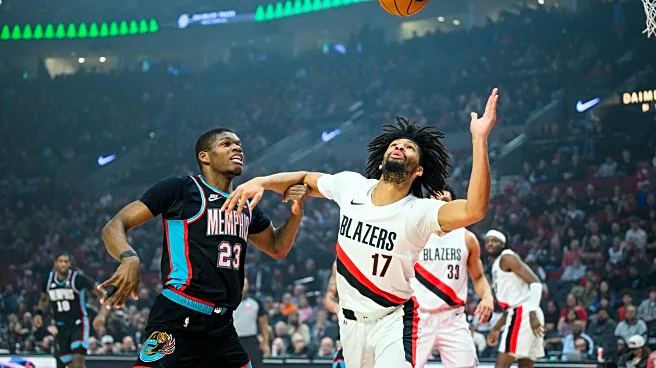
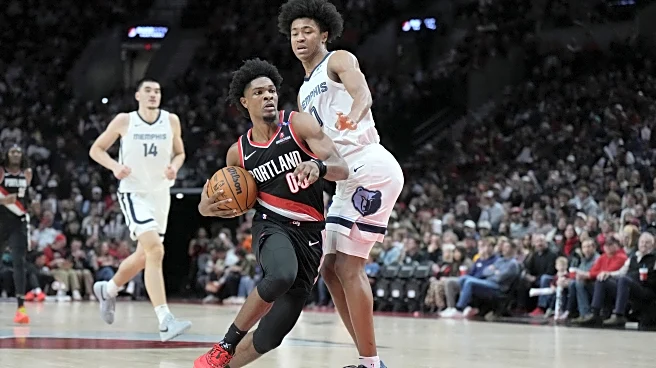
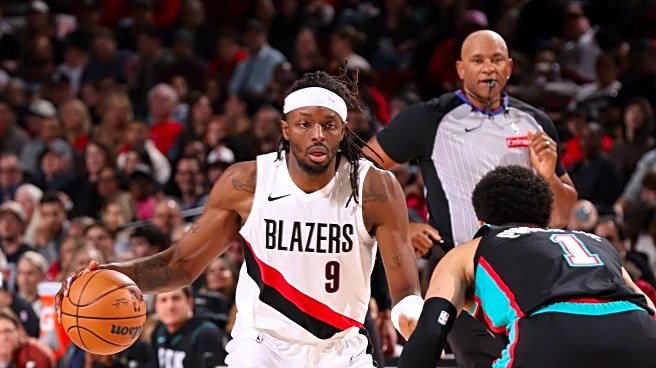
Caleb Love, a rookie guard for the Portland Trail Blazers, was a healthy inactive during the team's recent 135-115 victory over the Memphis Grizzlies. Despite exceeding expectations as a two-way player, Love's efficiency has been a concern, with a field-goal conversion rate of 39.1% and a three-point success rate of 32.1% this season. The Trail Blazers' backcourt is regaining strength with the return of players Blake Wesley and Scoot Henderson from injuries, which may limit Love's opportunities in the rotation. Love has been active for 43 of his allotted 50 games as a two-way player, prompting the team to preserve his eligibility by keeping him inactive. However, he may have a chance to play in the upcoming game against the Grizzlies, as Shaedon
Sharpe is unlikely to participate due to a calf injury.
Why It's Important?
Caleb Love's situation highlights the competitive nature of securing a spot in the NBA, especially for rookie players. His potential exclusion from the rotation underscores the challenges faced by new players in maintaining their positions amidst a recovering roster. The Trail Blazers' decision to manage Love's game eligibility reflects strategic planning to maximize his contributions over the season. This scenario also illustrates the broader dynamics of team management in professional sports, where player health and performance metrics significantly influence roster decisions. For Love, this period is crucial for demonstrating his value and adaptability to the team's evolving needs.
What's Next?
Looking ahead, Caleb Love's future with the Trail Blazers will depend on his ability to improve his shooting efficiency and adapt to the team's strategic needs. The upcoming games will be critical for him to showcase his skills, especially if other players are sidelined due to injuries. The Trail Blazers' coaching staff will likely continue to evaluate Love's performance and potential contributions as they navigate the season. His ability to secure a more permanent role will hinge on his performance in these opportunities and the overall health of the team's backcourt.