


What's Happening?
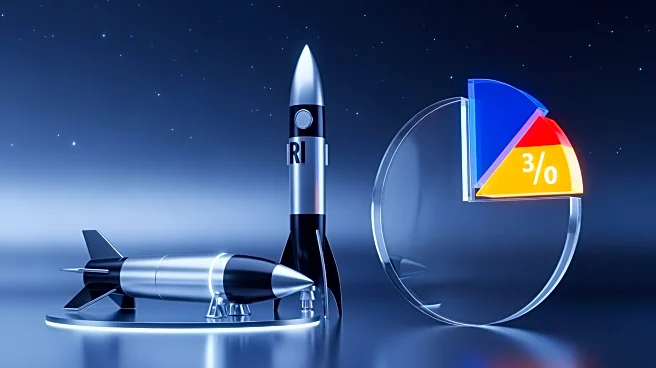
SpaceX, led by Elon Musk, is reportedly planning to allocate up to 30% of its upcoming initial public offering (IPO) to retail investors, a significant increase from the typical 5-10% allocation. This move is seen as a strategic effort to engage retail investors, who
have shown strong interest in Musk's ventures, such as Tesla. The IPO, which could be filed as soon as this week, aims to raise $50 billion, potentially valuing SpaceX at $1.8 trillion. This valuation would make it the largest IPO in history, surpassing Saudi Aramco's $29 billion IPO in 2020. SpaceX is known for its reusable rockets and satellite deployments, contributing to its high valuation.
Why It's Important?
The decision to allocate a larger portion of the IPO to retail investors reflects a growing trend of democratizing access to high-profile stock offerings. This could set a precedent for future IPOs, encouraging more companies to consider retail investors as a significant part of their capital-raising strategies. For SpaceX, this move could enhance its public image and strengthen its financial base by tapping into the enthusiasm of individual investors. The potential $1.8 trillion valuation underscores the market's confidence in SpaceX's innovative capabilities and its role in the burgeoning space industry.
What's Next?
As SpaceX prepares for its IPO, the company will likely continue to engage with various financial institutions to manage the distribution of shares. Bank of America is expected to handle domestic retail investors, while Citigroup will focus on international distribution. The success of this IPO could influence how other tech and space companies approach their public offerings, potentially leading to more inclusive investment opportunities for retail investors. Additionally, the market will closely watch how SpaceX's stock performs post-IPO, given its high valuation and the current economic climate.