

What's Happening?
Saronic Technologies has successfully closed a $1.75 billion Series D funding round, led by Kleiner Perkins, valuing the company at $9.25 billion. This funding will support the expansion of Saronic's autonomous surface vessels and AI-driven maritime capabilities.
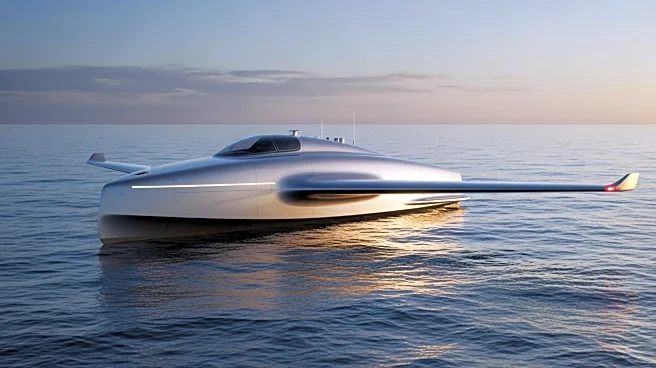
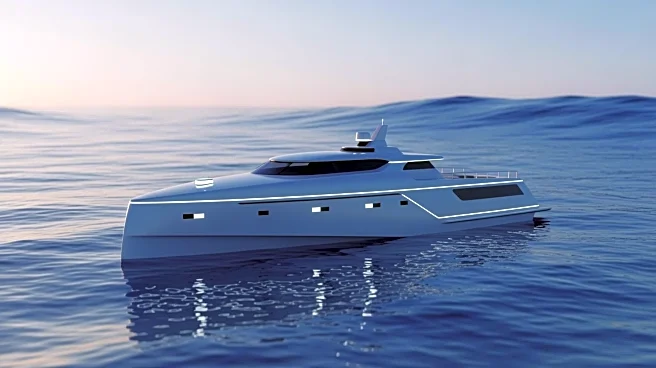
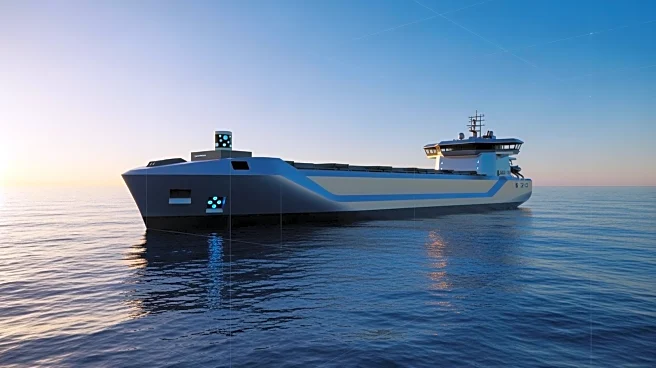
The company plans to scale its production of advanced autonomous ships, ranging from the 24-foot Corsair to the 180-foot Marauder, to meet increasing demand from U.S. and allied customers. Saronic's approach integrates advanced manufacturing and software-defined production to enhance U.S. shipbuilding capacity, aiming to address the erosion of American shipbuilding capabilities over recent decades. The funding will also facilitate the development of Port Alpha, a next-generation shipyard, and the expansion of existing facilities in Louisiana and Texas.
Why It's Important?
The significant investment in Saronic Technologies underscores the strategic importance of autonomous maritime capabilities for national defense and commercial applications. By enhancing U.S. shipbuilding capacity, Saronic aims to strengthen the industrial base necessary for maritime dominance, which is crucial for protecting trade routes and projecting power. The development of autonomous vessels with greater range and payload capacity could revolutionize naval operations and logistics, offering a competitive edge in global maritime security. This initiative also highlights the growing intersection of technology and traditional industries, as advanced manufacturing techniques and AI are increasingly integrated into shipbuilding.
What's Next?
Saronic plans to rapidly scale its production capabilities and explore solutions for challenges in the maritime domain, including surface and subsurface operations. The company will focus on completing the development of Port Alpha and expanding its production facilities to support the increased demand for autonomous vessels. As Saronic advances its shipbuilding model, it may influence policy discussions on maritime security and industrial strategy, potentially leading to further investments in autonomous technologies and infrastructure.