








What's Happening?
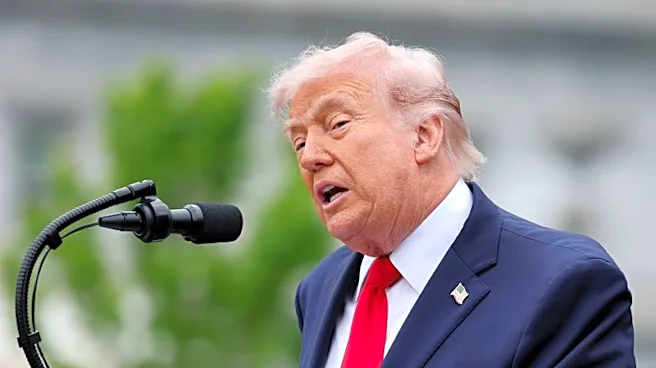
President Trump has announced a new initiative aimed at helping Americans build substantial retirement savings with the assistance of federal support. During a recent signing event for an executive order, Trump outlined a plan where a 25-year-old worker
could potentially accumulate a $465,000 nest egg by age 65 by investing $165 monthly, with the help of the Federal Saver's Match. This initiative is part of a broader effort to provide retirement savings options for workers who lack employer-sponsored plans. The executive order directs the Treasury Department to launch TrumpIRA.gov by January 1, 2027, a platform where workers can compare low-cost individual retirement accounts. The plan targets low-income workers, offering a federal match of up to $1,000 annually for single filers and $2,000 for joint filers.
Why It's Important?
This initiative is significant as it addresses the retirement savings gap for millions of Americans who do not have access to employer-sponsored retirement plans. By providing a federal match, the plan incentivizes savings and aims to make retirement planning more accessible and affordable. The potential impact is substantial, as it could lead to increased financial security for low-income workers, independent contractors, and employees of small businesses. The plan also highlights the importance of long-term investment growth, encouraging savers to invest in assets that can yield significant returns over time. This could lead to a shift in how Americans approach retirement savings, emphasizing the role of government support in personal financial planning.
What's Next?
The next steps involve the development and launch of TrumpIRA.gov, which is scheduled for January 2027. This platform will be crucial in providing workers with the tools to compare and select retirement accounts that best suit their needs. Additionally, the initiative may prompt discussions among policymakers and financial institutions about expanding retirement savings options and improving financial literacy. As the plan unfolds, it will be important to monitor its implementation and the response from the public and financial sectors.