

What's Happening?
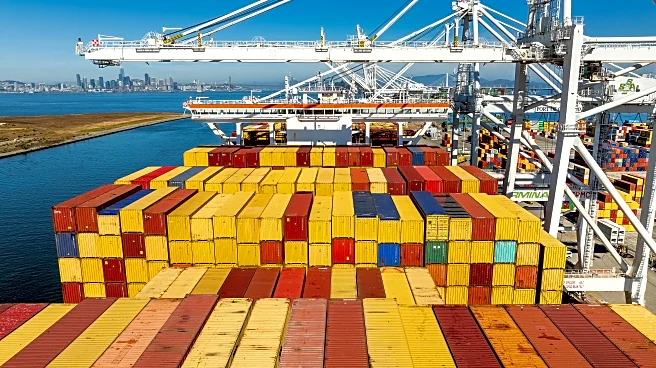
A recent analysis by the JPMorganChase Institute reveals that tariffs paid by midsize U.S. businesses have tripled over the past year. This development is linked to President Trump's policy of imposing higher taxes on imports, which has led to significant economic disruptions. The report highlights that these additional costs are being absorbed by companies employing around 48 million people in the U.S. These businesses, which Trump had aimed to support, are now facing increased operational costs. As a result, they are either passing these costs onto consumers through higher prices, reducing their workforce, or accepting lower profit margins. The study indicates a shift in trade patterns, with some companies moving away from Chinese suppliers
to other Asian regions. However, it remains unclear if this shift is due to rerouting by China or genuine changes in supply chains.
Why It's Important?
The tripling of tariffs has significant implications for the U.S. economy, particularly for midsize businesses that lack the pricing power of larger corporations. These companies are crucial to the U.S. economy, employing millions and contributing to economic growth. The increased tariffs challenge their ability to compete, potentially leading to higher consumer prices and reduced employment. The report contradicts the administration's claims that foreign entities bear the tariff costs, showing instead that U.S. companies are directly impacted. This situation could lead to broader economic consequences, including slowed economic growth and increased inflationary pressures, as businesses struggle to manage these additional costs.
What's Next?
The ongoing adjustments by companies to the tariff regime suggest that the economic landscape will continue to evolve. The Supreme Court is expected to rule on the legality of some of Trump's tariffs, which could have significant implications for future trade policies. Additionally, the administration's stance on tariffs and trade deficits will likely continue to be a contentious issue, influencing both domestic economic policy and international trade relations. Businesses may need to further adapt their supply chains and pricing strategies in response to these developments.