








What's Happening?
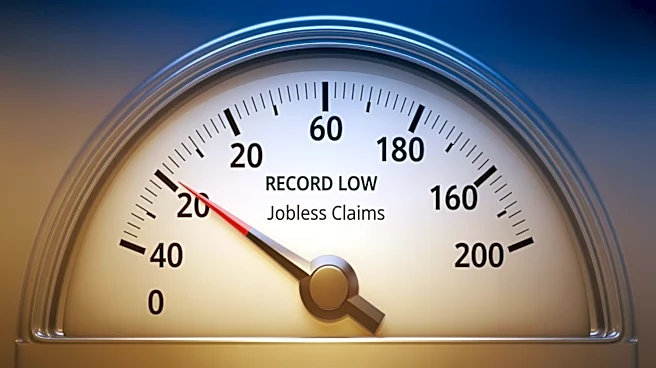
The U.S. Labor Department reported a significant drop in initial unemployment claims, reaching 189,000 for the week ending April 25, 2026. This marks the lowest level of jobless claims since September 1969. The decrease of 26,000 claims from the previous
week surpassed analysts' expectations, which had projected 212,000 applications. The four-week moving average also declined, indicating reduced volatility in unemployment figures. Additionally, ongoing unemployment benefits fell to their lowest in two years, with the insured unemployment rate holding steady at 1.2%. Notable reductions in claims were observed in states like New York, California, and Connecticut.
Why It's Important?
The decline in jobless claims suggests a robust labor market, which is a positive indicator for the U.S. economy. Despite recent workforce reductions by major companies, the low level of unemployment claims reflects a 'low-hire, low-fire' dynamic, where layoffs are minimized, and the unemployment rate remains low. This stability in the labor market is crucial for economic growth and consumer confidence. The Federal Reserve's decision to hold interest rates steady further underscores the perceived stability in the job market. However, the limited availability of new job openings could pose challenges for those seeking employment.
Beyond the Headlines
The current labor market conditions highlight a shift towards stability post-pandemic, but they also reveal underlying challenges. The 'low-hire, low-fire' environment may limit opportunities for job seekers, particularly those affected by recent layoffs. This situation could lead to increased competition for available positions and necessitate policy interventions to stimulate job creation. Additionally, the sustained low unemployment claims may influence future monetary policy decisions by the Federal Reserve, as they balance economic growth with inflation control.