






What's Happening?
Tesla has reported better-than-expected earnings for the first quarter of 2026, with earnings of 41 cents per share, surpassing Wall Street's expectation of 37 cents. The company's revenue reached $22.39 billion, slightly below market expectations. Despite
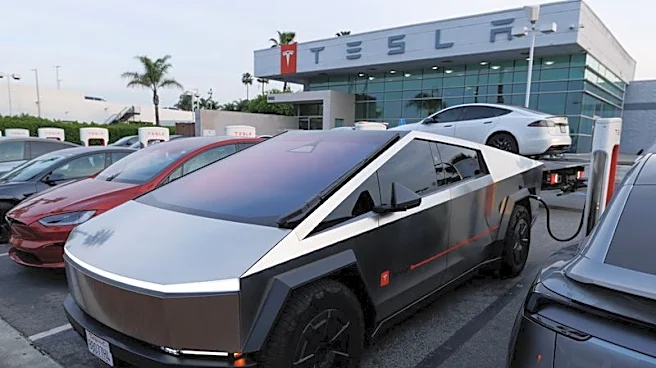
challenges in its core automotive business, Tesla's stock rose over 3% following the earnings report. CEO Elon Musk is steering the company towards AI and robotics, emphasizing the potential of humanoid robots and self-driving robotaxis. However, tangible benefits from these projects are yet to be realized, and investor concerns persist regarding delivery timelines. Tesla's auto business faces competition from Chinese manufacturers and backlash related to Musk's political affiliations.
Why It's Important?
Tesla's earnings performance is significant for investors and the broader tech industry, as it reflects the company's ability to adapt and innovate. The shift towards AI and robotics could position Tesla as a leader in these emerging fields, potentially transforming industries and societal norms. However, the company's struggles in its traditional automotive sector highlight the complexities of transitioning to new technologies. Stakeholders are keenly observing Tesla's progress, as successful implementation could drive economic growth and technological advancements, while failure could impact investor confidence and market dynamics.
What's Next?
Tesla is preparing to roll out robotaxis in Florida cities and Las Vegas, expanding its autonomous vehicle operations. The company is also discontinuing two flagship models, the Model S and Model X, and developing a smaller, cheaper electric car to compete with Chinese automakers. As Tesla navigates these changes, stakeholders will be watching its ability to deliver on promises and maintain market competitiveness. The company's future hinges on overcoming production challenges and gaining consumer acceptance for new technologies.