



What's Happening?
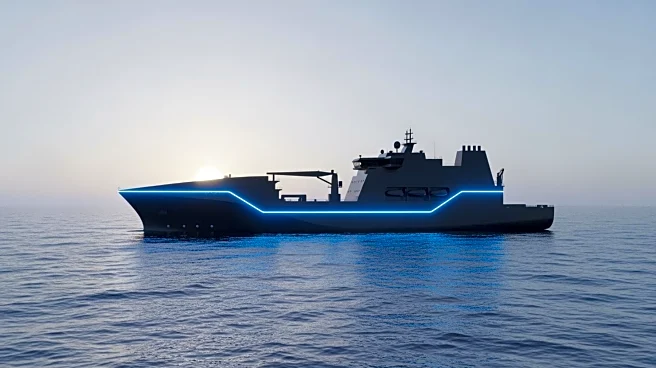
A study conducted by Vard, a subsidiary of Fincantieri, has confirmed the technical feasibility of nuclear-powered offshore vessels. The research, part of the NuProShip II project, demonstrates that small fourth-generation nuclear reactors can be integrated into dynamically positioned vessels, meeting safety and operational requirements. The study included a concept design for a nuclear-powered offshore construction vessel, evaluating the integration of a helium gas-cooled nuclear reactor. The project also explored alternative energy solutions, such as super-critical CO₂ turbines, to complement nuclear propulsion.
Why It's Important?
The findings of the Vard study represent a significant advancement in maritime innovation, offering a potential pathway to zero-emission
shipping. Nuclear-powered vessels could revolutionize the industry by providing high operational reliability and extended endurance without greenhouse gas emissions. This development aligns with global decarbonization goals and could lead to a new era of environmentally responsible shipping. The study also underscores the need for updated regulatory frameworks and increased industrial experience in civilian nuclear marine propulsion.
What's Next?
Following the conclusion of the NuProShip II project in 2026, the SFI SAINT research Centre, led by NTNU, will focus on further developing nuclear technology for maritime use. The maritime industry will need to address regulatory and public acceptance challenges to realize the potential of nuclear-powered vessels. Stakeholders, including shipowners and environmental groups, will be closely watching the progress of this technology and its implications for the future of shipping.