




What's Happening?
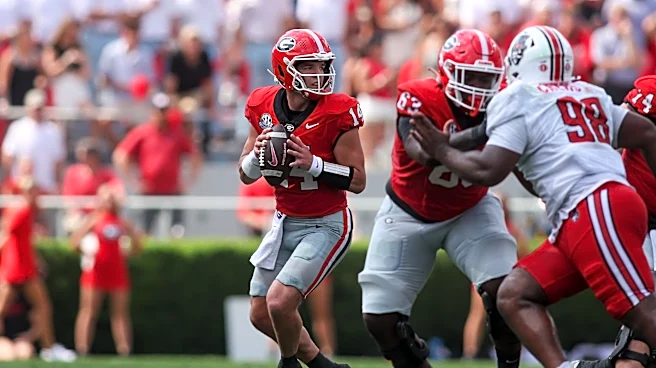
An arbitrator has approved name, image, and likeness (NIL) deals for two athletes from Georgia, following a re-evaluation by the College Sports Commission (CSC). Initially, the CSC had rejected the deals, but after Georgia brought the case to arbitration,
the deals were reassessed and found to fit within the CSC's updated range-of-compensation model. The arbitrator's decision is seen as a reinforcement of the integrity of the neutral arbitration process that governs NIL agreements in college sports. The CSC emphasized that this re-review was an exception due to a key adjustment made after the arbitration began. The arbitrator also declined to expand the scope of the CSC's authority or award Georgia the attorney fees incurred during the case.
Why It's Important?
This decision is significant as it underscores the evolving landscape of college sports, particularly in the realm of NIL agreements. The ruling highlights the role of arbitration in resolving disputes and ensuring compliance with established compensation models. For athletes, this decision could pave the way for more consistent and transparent processes in securing NIL deals. It also sets a precedent for how similar cases might be handled in the future, potentially influencing the strategies of universities and athletes in negotiating NIL agreements. The outcome may encourage other institutions to seek arbitration in disputes, knowing that the process is designed to uphold fairness and integrity.
What's Next?
Following this decision, other universities and athletes may be more inclined to pursue arbitration in NIL disputes, especially if they believe their agreements fall within the acceptable compensation range. The CSC's stance on not routinely re-reviewing deals suggests that future cases will likely adhere strictly to initial assessments unless significant changes occur. Stakeholders in college sports, including athletes, universities, and regulatory bodies, will be closely monitoring how this decision impacts future NIL negotiations and the overall governance of college athletics.