




What's Happening?
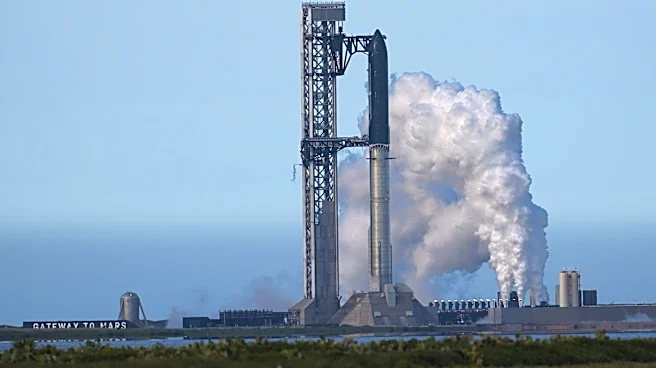
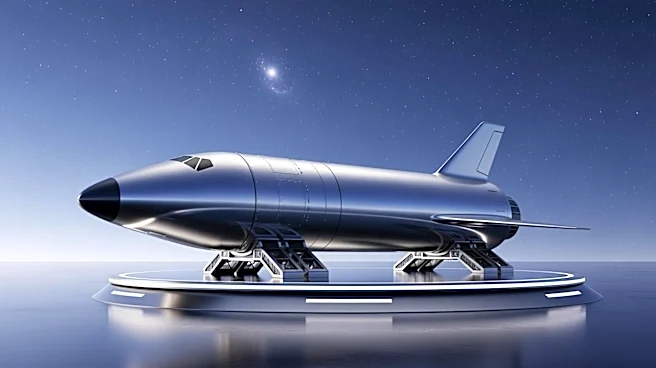
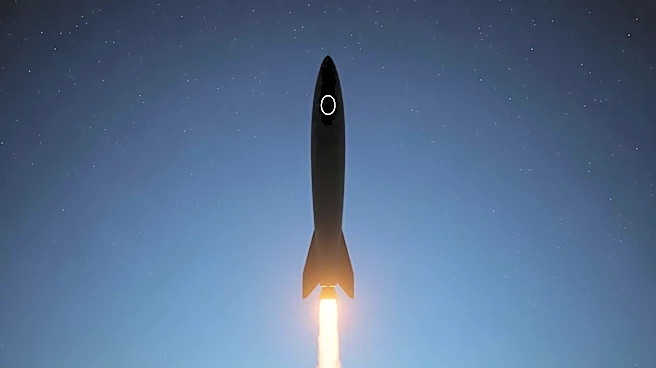
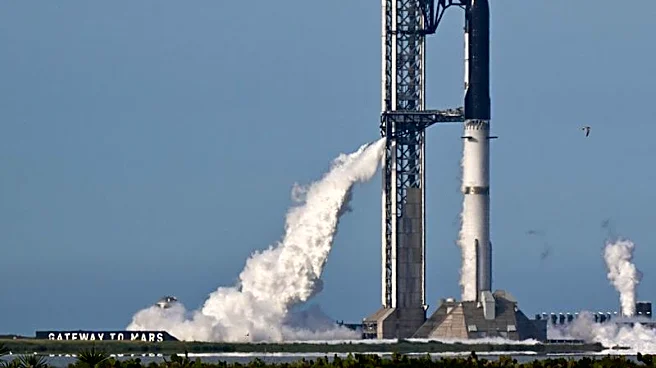
SpaceX launched its twelfth test flight of the next-generation Starship V3 from Starbase, Texas. This marked the first flight of the upgraded Starship and Super Heavy Version 3 vehicles, featuring the new Raptor 3 engines. The mission began with all 33
Raptor 3 engines igniting successfully, although one engine shut down during ascent. The Super Heavy booster completed its first-stage climb and executed a hot-staging maneuver, allowing the Starship's upper stage to continue toward space. Despite losing one of its vacuum-optimized Raptor 3 engines, the Starship maintained its trajectory and demonstrated engine-out capability. The spacecraft re-entered Earth's atmosphere, gathering critical data on heatshield performance and structural integrity, before guiding itself to a planned splashdown in the Indian Ocean.
Why It's Important?
This successful test flight is a pivotal moment for SpaceX as it continues to refine its Starship technology, which is intended to revolutionize space travel by making it more cost-effective and frequent. The ability to deploy Starlink simulators and satellites during the test flight demonstrates the potential for Starship to support a variety of missions, including satellite deployment and deep space exploration. The data collected from this flight will inform future designs and missions, potentially accelerating the timeline for human missions to Mars and other celestial bodies. This advancement could significantly impact the aerospace industry, international space exploration efforts, and the future of human space travel.