








What's Happening?
The 2026 FIFA World Cup, hosted in the United States, has been marred by controversy as several international figures, including Somali referee Omar Abdulkadir Artan, were denied entry into the country. Artan's exclusion has drawn significant global criticism,
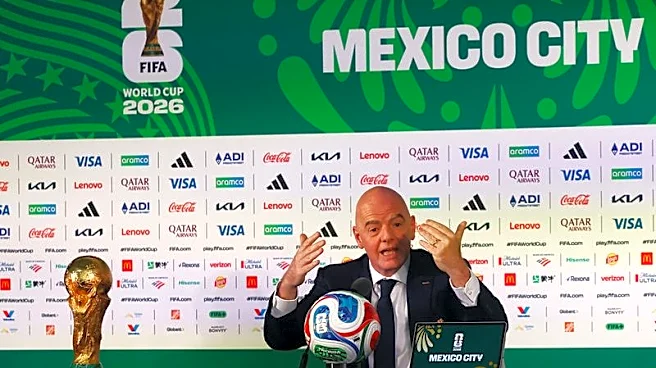
particularly as he was set to officiate at the tournament. The denial of entry has raised questions about the U.S.'s commitment to hosting a truly global event, as some fans and officials have been barred from attending. This situation has sparked a debate about the implications of such decisions, especially in light of resurfaced social media posts where Artan criticized President Trump. Additionally, the U.S. flag was reportedly booed during the opening ceremony in Mexico City, highlighting the political tensions surrounding the event.
Why It's Important?
The entry denials have significant implications for international relations and the perception of the United States as a host nation. By restricting access to certain individuals, the U.S. risks alienating international communities and undermining the spirit of global unity that the World Cup represents. This situation could affect diplomatic relations and the country's image on the world stage. Furthermore, the controversy may impact the experiences of fans and athletes, who could find themselves embroiled in political debates rather than focusing on the sporting event. The incident also raises concerns about the influence of political decisions on international sports and the potential for such actions to overshadow the event itself.
What's Next?
As the tournament progresses, it is likely that discussions around these entry denials will continue, potentially prompting responses from international sports bodies and governments. The U.S. may face pressure to address these issues and ensure that future events are more inclusive. Additionally, there could be calls for clearer guidelines and transparency in the visa and entry processes for international events. The situation may also lead to broader discussions about the role of politics in sports and the responsibilities of host nations to uphold the values of inclusivity and fairness.
Beyond the Headlines
The controversy surrounding the World Cup entry denials highlights deeper issues of cultural perception and ethnocentrism. Criticisms of U.S. cultural attitudes, particularly in the context of international events, suggest a need for greater cultural sensitivity and understanding. The incident underscores the potential for political leadership to influence national attitudes and international perceptions. As the U.S. continues to host global events, it may need to address these cultural and political challenges to foster a more welcoming and inclusive environment.