






What's Happening?
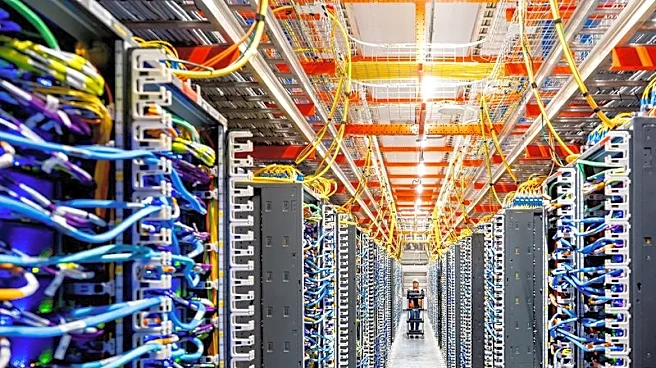
Morgan Stanley analysts have introduced a new economic measure called Gross Domestic Intelligence (GDI) to assess the AI resources of nations and industries. This measure focuses on the availability and capacity of AI compute infrastructure, such as GPUs,
networking gear, and data centers. According to a recent report by Epoch AI, the United States leads globally with approximately 75% of AI computational power, followed by China with about 10%. The report highlights the dominance of American companies like Google, which utilizes its own TPUs and Nvidia GPUs. The concept of GDI is gaining traction as investors look to evaluate the competitiveness of countries and industries based on their AI capabilities.
Why It's Important?
The introduction of GDI as a metric underscores the growing importance of AI in shaping economic power and competitiveness. As AI technologies become integral to various sectors, the ability to harness AI resources effectively can significantly influence a nation's economic standing. For the U.S., leading in AI computational power reinforces its position as a global tech leader, potentially attracting more investments and fostering innovation. Conversely, countries with limited AI resources may face challenges in keeping up with technological advancements, impacting their economic growth and global influence.
What's Next?
As GDI gains recognition, it may influence investment strategies and policy decisions. Nations might prioritize enhancing their AI infrastructure to improve their GDI scores, potentially leading to increased funding for AI research and development. Companies could also focus on expanding their AI capabilities to remain competitive. Additionally, international collaborations and partnerships may emerge as countries seek to bolster their AI resources. The evolving landscape could prompt regulatory considerations to ensure equitable access to AI technologies and address potential ethical concerns.