






What's Happening?
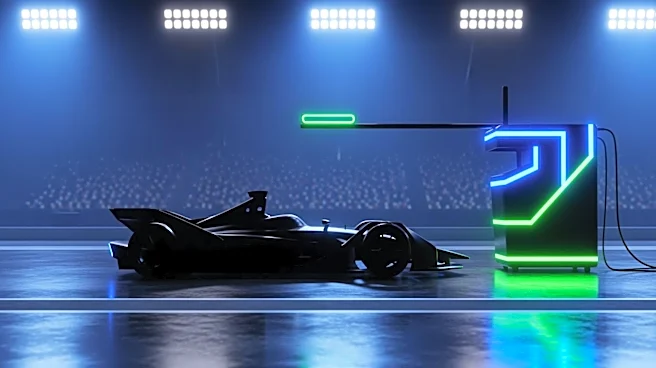
The ABB FIA Formula E World Championship's Madrid E-Prix marked a significant turning point in electric racing with the introduction of Pit Boost, a high-speed, 600kW mid-race charging strategy. This innovation requires teams to decide whether to recharge
during the race, a decision that can make or break their performance. Jaguar TCS Racing excelled in this new format, securing a one-two finish with António Félix da Costa and Mitch Evans. The race highlighted the importance of data and strategic execution over raw speed, as teams like Porsche, Jaguar, and Stellantis leverage their resources and information networks to maintain competitive advantages.
Why It's Important?
The introduction of Pit Boost in Formula E represents a shift in how races are won, emphasizing strategic planning and data analysis over traditional speed. This change mirrors broader trends in the electric vehicle industry, where efficiency and smart energy management are becoming crucial. The success of teams like Jaguar and Porsche underscores the importance of technological innovation and strategic thinking in maintaining a competitive edge. This development could influence how other motorsport series and the automotive industry approach energy management and sustainability.
What's Next?
As the Formula E season progresses, teams will continue to refine their strategies around Pit Boost, potentially leading to more dynamic and unpredictable races. The ongoing manufacturer testing for the Gen4 era promises even faster cars, suggesting that the series will continue to push the boundaries of electric racing. This evolution could attract more manufacturers and sponsors, further solidifying Formula E's position as a leader in sustainable motorsport.
Beyond the Headlines
The strategic complexity introduced by Pit Boost may lead to a reevaluation of what it means to be a successful driver or team in Formula E. As software and data analysis become more critical, the role of engineers and data scientists in motorsport could gain prominence. This shift might also influence how fans engage with the sport, as understanding the nuances of strategy becomes as important as appreciating the on-track action.