

What's Happening?
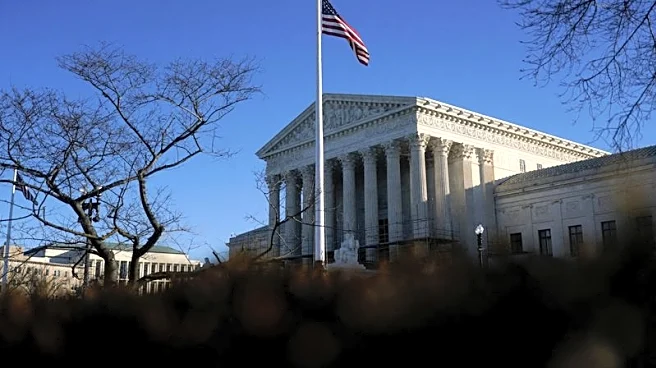
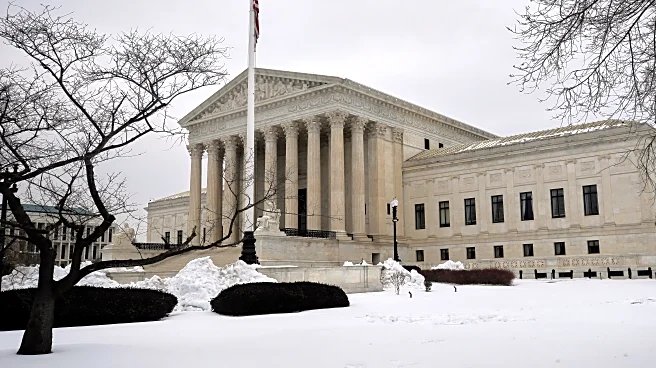
The U.S. Supreme Court is set to hear arguments from ExxonMobil, supported by the Trump Administration, regarding a claim for compensation over assets seized by the Cuban government in 1960. ExxonMobil is seeking over $1 billion, citing accrued interest
and potential enhanced damages, for assets originally valued at $70 million when confiscated from subsidiaries of Standard Oil. The legal basis for the claim is the Helms-Burton Act of 1996, which allows U.S. nationals to sue for property confiscated by the Cuban government post-1959. Previous U.S. administrations had suspended parts of this act to avoid diplomatic tensions, but President Trump lifted these suspensions in 2019. ExxonMobil's lawsuit, filed in 2019, challenges Cuban state-owned entities under this act, but a district court ruled in 2021 that these entities could invoke the Foreign Sovereign Immunities Act, which generally protects foreign governments from U.S. lawsuits. ExxonMobil has now appealed to the Supreme Court to clarify the scope of the Helms-Burton Act.
Why It's Important?
The Supreme Court's decision could have significant implications for U.S.-Cuba relations and international business. A ruling in favor of ExxonMobil might pave the way for other U.S. companies to seek compensation for assets seized by the Cuban government, potentially leading to a surge in similar lawsuits. This could strain diplomatic relations with countries like Canada and Spain, whose companies have investments in Cuba. Additionally, the case tests the limits of the Helms-Burton Act against the Foreign Sovereign Immunities Act, potentially setting a precedent for how U.S. courts handle claims against foreign governments. The outcome could influence U.S. foreign policy and economic interests in the region.
What's Next?
If the Supreme Court rules in favor of ExxonMobil, it could lead to a wave of litigation from other companies seeking compensation for expropriated assets in Cuba. This might prompt diplomatic negotiations or legislative changes to address the potential fallout. Conversely, a ruling against ExxonMobil could reinforce the protections offered by the Foreign Sovereign Immunities Act, limiting the scope of the Helms-Burton Act. The decision will likely be closely watched by international investors and governments, as it could affect future foreign investments and bilateral relations.