



What's Happening?
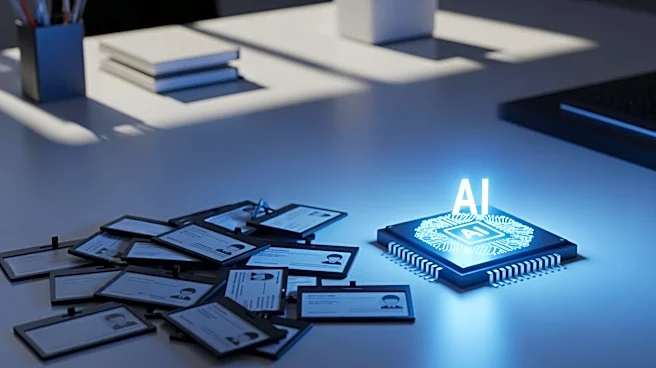
HR departments are increasingly integrating AI into their operations, with a primary focus on talent acquisition (TA). According to a 2026 CHRO Survey, 91% of HR leaders prioritize AI and workplace digitization, with TA being the most common area for
AI deployment. This is due to the structured nature of recruiting data and processes, which makes it an ideal testing ground for AI applications. However, as organizations look to expand AI use beyond TA, they face challenges in governance, data readiness, change management, and process clarity. These foundational elements are crucial for successful AI integration across broader HR functions.
Why It's Important?
The expansion of AI in HR beyond talent acquisition could lead to significant transformations in workforce management. By automating and optimizing various HR processes, organizations can improve efficiency, reduce costs, and enhance employee experiences. However, the success of such initiatives depends on addressing key challenges like data governance and change management. Properly implemented, AI can provide HR departments with powerful tools for strategic decision-making, potentially reshaping how companies manage their human resources and adapt to changing workforce dynamics.
What's Next?
HR departments will need to establish clear protocols for AI governance and accountability to ensure ethical and effective use. This includes setting standards for data quality and addressing potential biases. As AI adoption expands, HR leaders must also focus on change management, equipping teams with the necessary skills and training to adapt to new technologies. Measuring the impact of AI on productivity and business outcomes will be crucial for justifying further investments. Organizations that successfully navigate these challenges could set new benchmarks for HR innovation and efficiency.