







What's Happening?
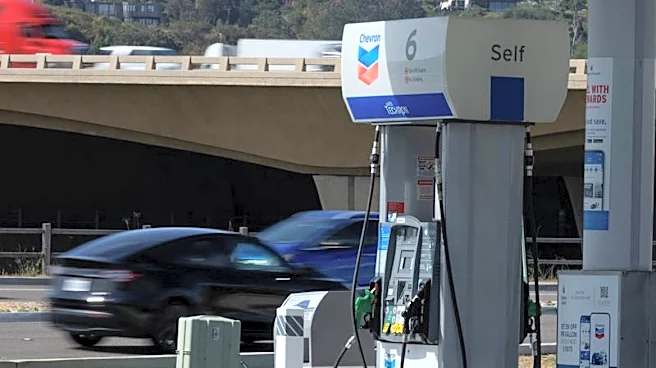
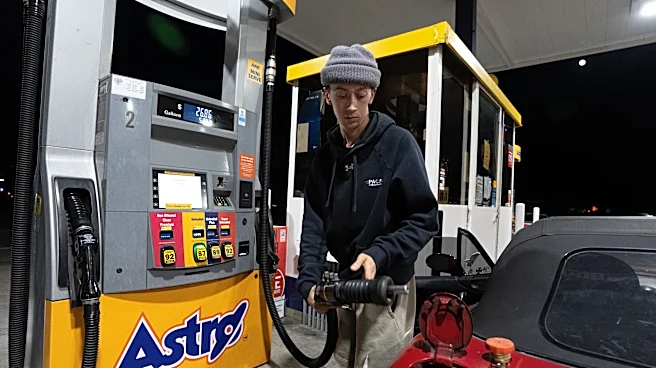
Gasoline prices in the United States have surged past $4.50 per gallon, driven by ongoing tensions between the U.S. and Iran. The national average for regular gas reached $4.536, marking a significant increase from the previous day. The situation is exacerbated
by a U.S. blockade against Iran, which has been in place for over three weeks. President Trump announced a temporary pause in 'Project Freedom,' a military operation in the Strait of Hormuz, to allow for negotiations with Iran. This geopolitical tension is contributing to the rising fuel costs, affecting American consumers.
Why It's Important?
The increase in gas prices has immediate economic implications for American consumers, particularly as the summer driving season approaches. Higher fuel costs can lead to increased transportation expenses, affecting everything from personal travel to the cost of goods. The situation underscores the vulnerability of global oil markets to geopolitical tensions, highlighting the need for energy diversification and stability. The economic strain on consumers could also influence public opinion and political discourse, especially in regions heavily reliant on driving.
What's Next?
Negotiations between the U.S. and Iran will be crucial in determining the future of gas prices. A resolution could stabilize the market, while prolonged tensions may lead to further price increases. Policymakers may face pressure to address energy independence and explore alternative energy sources to mitigate such vulnerabilities. The situation will likely remain a key topic in international relations and economic policy discussions.