







What's Happening?
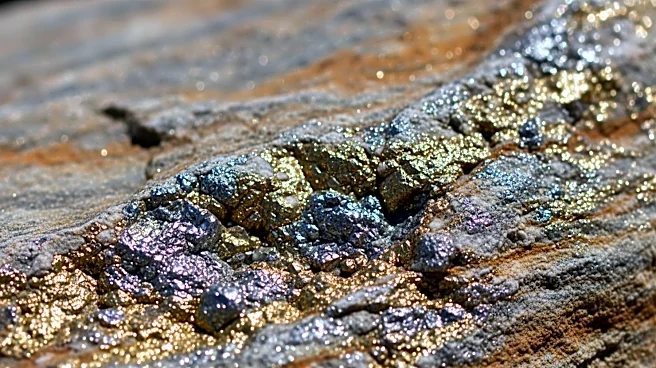
American Pacific Mining has announced assay results from its Madison Copper-Gold Project in Montana, revealing high concentrations of copper, gold, and silver. The underground sampling identified a breccia-hosted zone linked to a deeper porphyry source,
with copper concentrations reaching 25%, gold up to 3.19 grams per tonne, and silver up to 27.2 grams per tonne. These findings confirm the presence of a mineralized system, supporting the interpretation of a feeder system. The company plans to further explore this system's down-plunge extent in an upcoming drilling campaign. The results also indicate a continuous mineralized zone, with the breccia pipe serving as a primary fluid conduit and the decline ramp showing extended mineralization.
Why It's Important?
The assay results from the Madison Project are significant as they suggest a larger and more extensive mineralizing system than previously thought. This discovery could enhance American Pacific Mining's resource base and increase its potential for future production. The high-grade copper and gold findings are particularly noteworthy, as they could attract further investment and interest in the project. The results also provide clearer drill targets for the company, which could lead to more efficient and targeted exploration efforts. This development is important for the U.S. mining industry, as it highlights the potential for significant resource discoveries and economic benefits from domestic mining operations.
What's Next?
American Pacific Mining plans to incorporate the assay results into a 3D geological model to refine drill angles and advance a reverse circulation and diamond drilling program. This program will target various depths of porphyry mineralization, aiming to further delineate the extent of the mineralized system. The company will also continue to monitor seasonal groundwater levels to access previously flooded segments, offering new geological insights. These efforts are expected to enhance the company's understanding of the Madison Project and support its long-term development strategy.