
What's Happening?
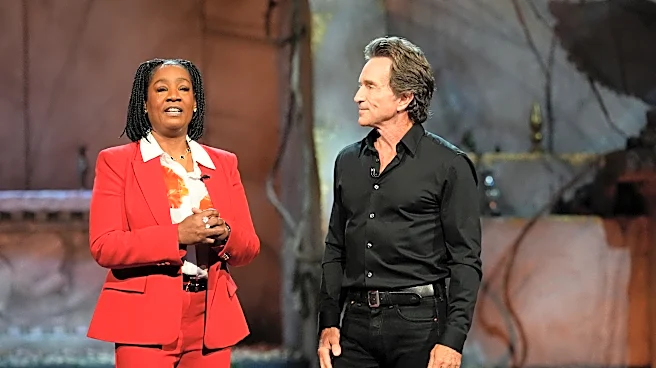
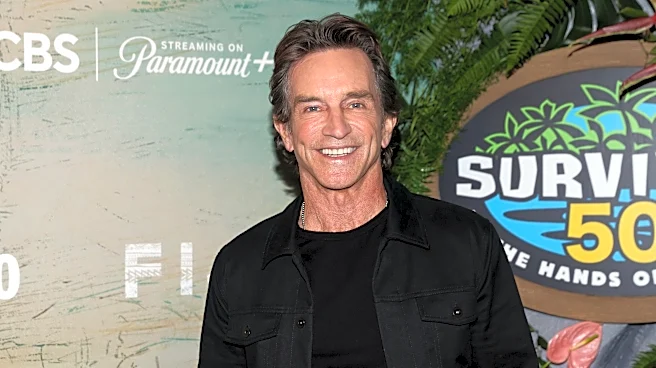
During the live broadcast of the 'Survivor 50' finale, host Jeff Probst inadvertently revealed the outcome of a crucial fire-making challenge before it aired. The finale, which was a three-hour event,
included pre-recorded footage from Fiji and a live audience in Los Angeles. Probst's slip occurred when he brought contestant Rizo Velovic on stage and indicated he had lost the fire-making challenge, a key moment that had not yet been shown to viewers. This led to an awkward moment as the show had to cut to a commercial break. Upon returning, Probst acknowledged the error, framing it as an unexpected twist in the game. Despite the mishap, Velovic expressed that the incident was a memorable part of 'Survivor' history, and Probst was praised for his professionalism in handling the situation.
Why It's Important?
The incident highlights the challenges of live television and the potential for unexpected errors, even for seasoned hosts like Jeff Probst. 'Survivor' has been a staple of reality TV for over 25 years, and this slip-up underscores the unpredictability of live broadcasts. It also demonstrates the resilience and adaptability required in the entertainment industry, as Probst managed to turn the mistake into a memorable moment. The event may influence how live segments are handled in future broadcasts, potentially leading to more stringent protocols to prevent similar occurrences. For fans, it adds a layer of intrigue and unpredictability to the viewing experience, reinforcing the show's reputation for unexpected twists.
What's Next?
Following the incident, there may be discussions within the production team about improving live broadcast protocols to prevent similar errors. Jeff Probst's handling of the situation could be analyzed for best practices in live television hosting. Additionally, the event might spark conversations among fans and media about the dynamics of live reality TV and the role of hosts in maintaining the integrity of the show. Future 'Survivor' seasons may incorporate lessons learned from this incident to enhance the viewing experience and ensure smoother live broadcasts.