

What's Happening?
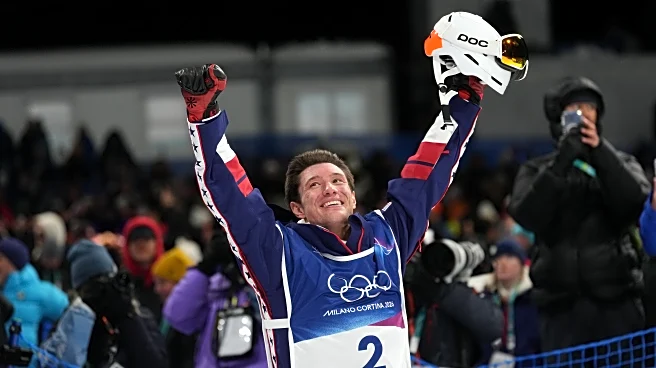
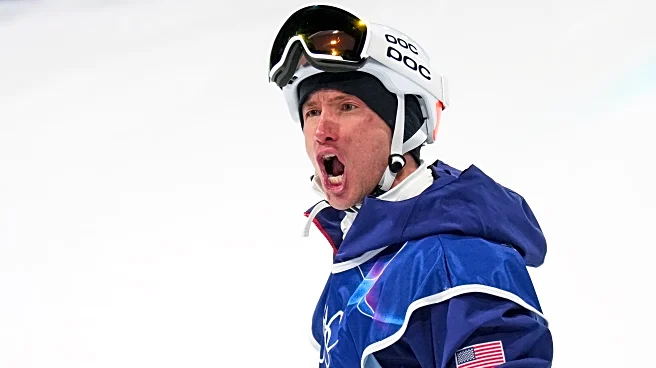
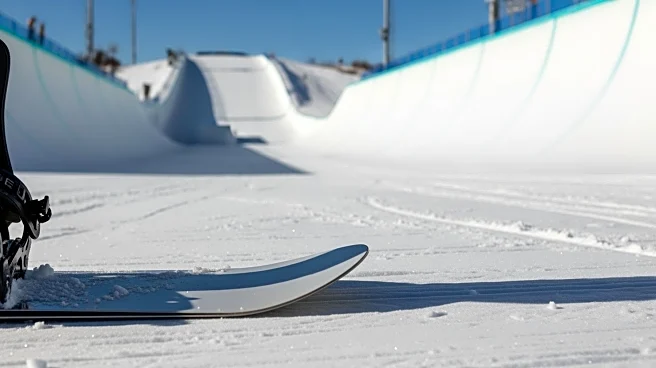
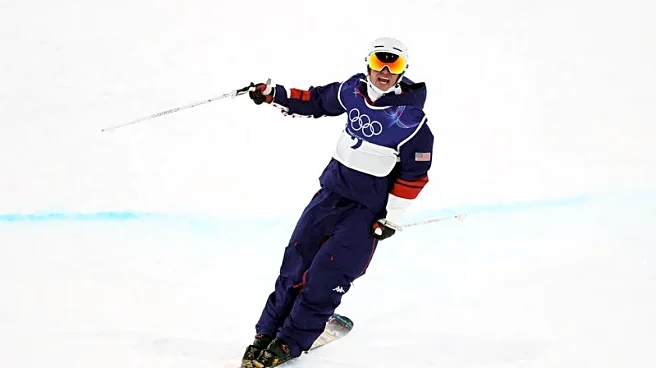
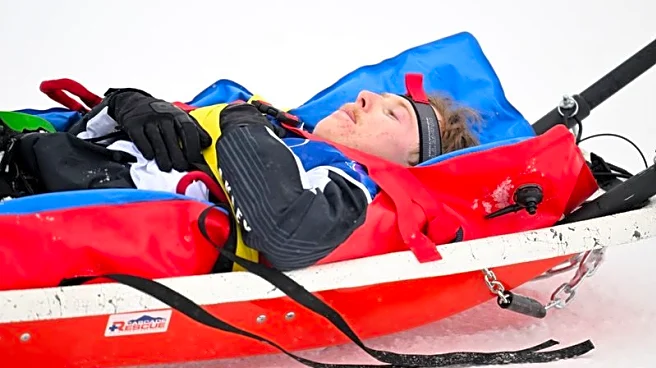
U.S. freeskier Nick Goepper sustained a knee sprain and a bone bruise after a fall during the men's freeski halfpipe final at the Winter Olympics in Livigno, Italy. The 31-year-old athlete crashed during his final run, attempting a complex trick with 1260 degrees of spin. Despite the fall, Goepper managed to walk away from the incident, expressing gratitude for avoiding more serious injury. He had been in third place before the crash, aiming for his first Olympic gold medal. Goepper, who has previously won two silver medals and a bronze, was ultimately pushed off the podium by Canada's Brendan Mackay.
Why It's Important?
Goepper's crash highlights the inherent risks in extreme sports, where athletes often push the limits to achieve top performances. His attempt
to execute a high-difficulty trick underscores the competitive nature of the Olympics, where athletes strive for excellence and innovation. The incident also draws attention to the importance of safety measures and medical readiness in high-risk sports. Goepper's resilience and determination to continue competing despite the setback may inspire other athletes facing similar challenges. Additionally, the crash and its aftermath could influence discussions on athlete safety and the balance between risk and reward in competitive sports.
What's Next?
Following the crash, Goepper is expected to focus on recovery and rehabilitation. His future participation in competitive events will depend on his recovery progress and medical clearance. The incident may prompt discussions within the sporting community about safety protocols and the potential need for rule adjustments to enhance athlete protection. Goepper's experience could also serve as a case study for sports organizations aiming to improve safety standards in extreme sports. Meanwhile, the Olympic Games will continue, with other athletes competing for medals in the remaining events.