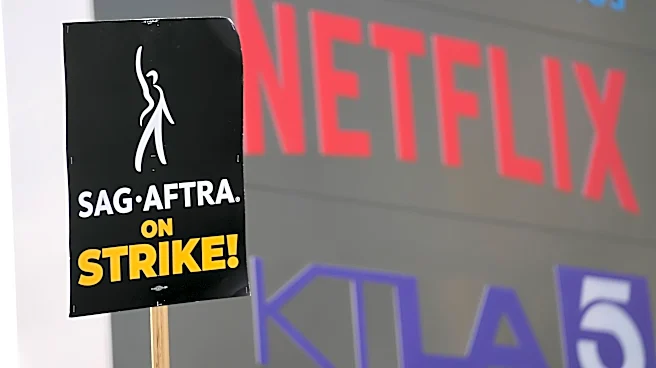

What's Happening?
The Writers Guild of America (WGA) and the Alliance of Motion Picture and Television Producers (AMPTP) have reached a tentative four-year agreement, marking a significant development in Hollywood labor
relations. This new contract, which extends beyond the typical three-year duration, includes provisions for enhanced health care plans, increased pension contributions, and additional compensation for streaming video on demand. Notably, the agreement introduces new rules regarding the use of artificial intelligence, such as licensing for AI training. The deal comes just weeks before the expiration of the current contract on May 1, 2026, and follows a history of labor disputes, including a significant strike in 2023. The agreement still requires ratification by union members and approval from the WGA board. Meanwhile, the AMPTP is also negotiating new agreements with unions representing screen actors and directors.
Why It's Important?
This tentative agreement is crucial for the stability of the entertainment industry, which has faced disruptions due to labor disputes. By addressing key issues such as health care, pensions, and the impact of artificial intelligence, the agreement aims to provide long-term stability and support for industry professionals. The inclusion of AI regulations is particularly significant as it reflects the industry's adaptation to technological advancements. The deal's approval could prevent potential strikes and production delays, benefiting both the studios and the workforce. Additionally, the focus on streaming compensation highlights the industry's shift towards digital platforms, ensuring that writers are fairly compensated in the evolving media landscape.
What's Next?
The next steps involve the ratification of the agreement by WGA members, which is expected to occur later this month. If approved, the contract will set a precedent for future negotiations, particularly concerning AI and streaming compensation. The outcome of these negotiations could influence ongoing talks between the AMPTP and other unions, potentially shaping the broader landscape of labor relations in Hollywood. Stakeholders, including writers, producers, and studios, will be closely monitoring the ratification process and its implications for the industry's future.