





What's Happening?
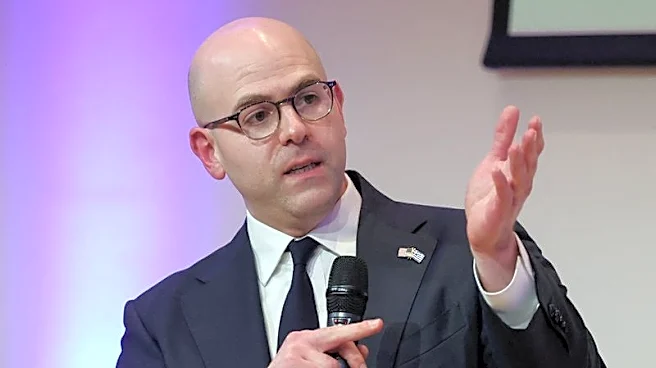
Federal Reserve Governor Christopher Waller has expressed concerns over the current economic conditions, particularly the potential for a long-lasting inflation shock and a stagnant labor market. Speaking at an event in Alabama, Waller noted that the ongoing
conflict with Iran has exacerbated inflationary pressures, which were already heightened by previous import tariffs. He emphasized the complexity of balancing the Fed's dual mandate of controlling inflation and maintaining employment, suggesting that the central bank might need to keep interest rates steady if inflation risks outweigh labor market concerns. Waller's remarks come as the market anticipates the Fed to maintain its current policy stance amid economic uncertainties.
Why It's Important?
The statements by Governor Waller underscore the challenges faced by the Federal Reserve in navigating economic policy during times of geopolitical tension. The potential for sustained inflation could impact various sectors of the U.S. economy, affecting consumer prices and business costs. A prolonged period of high inflation, coupled with a weak labor market, could complicate monetary policy decisions, potentially leading to a cautious approach in adjusting interest rates. This situation highlights the delicate balance the Fed must maintain to support economic stability while addressing inflationary pressures.
What's Next?
The Federal Reserve is likely to continue monitoring economic indicators closely, particularly inflation and employment data, to determine the appropriate course of action. Stakeholders, including businesses and policymakers, will be watching for any shifts in the Fed's policy stance, which could influence economic forecasts and investment decisions. The ongoing conflict with Iran and its impact on global markets will also be a critical factor in shaping future economic policies.