







What's Happening?
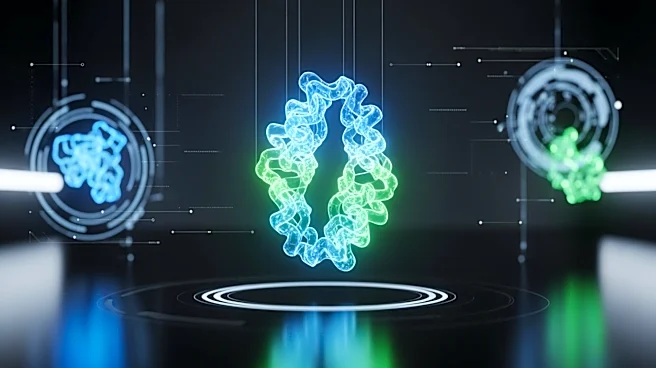
Researchers at Rice University, in collaboration with Johns Hopkins University and Microsoft, have developed a new method called Sequence Display to enhance AI-driven protein engineering. This approach generates over 10 million data points in a single
experiment, providing the necessary data to train AI models that predict optimal protein modifications. The method involves mutating DNA to create protein variants, which are then barcoded to record activity levels. This data is used to train AI models to identify mutations that improve protein function. The technique has been successfully applied to various proteins, demonstrating its potential to advance research tools and therapeutic proteins.
Why It's Important?
The development of Sequence Display addresses a significant bottleneck in protein engineering: the lack of sufficient data to train accurate AI models. By providing a practical framework for integrating AI with experimental data, this method could accelerate the discovery of new proteins with enhanced functions. This advancement has implications for biotechnology and pharmaceuticals, potentially leading to more efficient drug development and novel therapeutic solutions. The ability to rapidly generate and analyze large datasets could also spur innovation in other areas of biological research.
What's Next?
The success of this method may lead to broader adoption in the scientific community, encouraging further research into AI-driven protein engineering. As more data becomes available, AI models could become increasingly accurate, leading to breakthroughs in understanding protein functions and interactions. This could pave the way for new applications in medicine, agriculture, and environmental science. Additionally, the collaboration between academic institutions and industry partners like Microsoft highlights the potential for cross-sector partnerships to drive innovation.