
What's Happening?
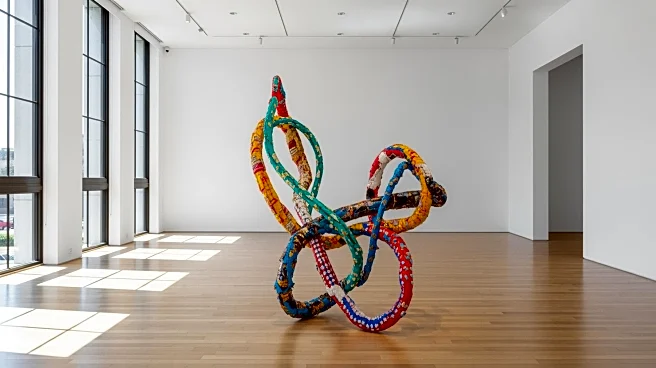
Scottish artist Nnena Kalu has been awarded the 2025 Turner Prize, becoming the first learning-disabled individual to receive this prestigious accolade. Her work, which includes suspended sculptures and
swirling vortex drawings, is currently displayed at the Cartwright Hall Art Gallery in Bradford as part of the UK City of Culture festival. The jury, led by Alex Farquharson, director of Tate Britain, praised Kalu's work for its visual and aesthetic quality, describing it as powerful and enigmatic. Kalu was nominated for her contributions to the Conversations exhibition at the Walker Art Gallery in Liverpool and her work at Manifesta 15 in Barcelona. Her recognition is seen as a significant moment for the learning-disabled artist community both nationally and internationally.
Why It's Important?
Nnena Kalu's win is a landmark achievement in the art world, highlighting the importance of inclusivity and recognition for learning-disabled artists. This award not only acknowledges Kalu's artistic talent but also challenges the art community to broaden its understanding and appreciation of diverse artistic expressions. The Turner Prize, known for its influence in contemporary art, sets a precedent for other institutions to follow in recognizing and supporting artists with disabilities. This could lead to increased opportunities and visibility for learning-disabled artists, encouraging a more inclusive art scene that values diverse perspectives and talents.
What's Next?
Following Kalu's win, there may be increased interest and support for learning-disabled artists, potentially leading to more exhibitions and opportunities for these artists to showcase their work. Art institutions might also reevaluate their criteria and practices to ensure they are inclusive and supportive of artists with disabilities. Additionally, Kalu's success could inspire other learning-disabled individuals to pursue careers in the arts, knowing that their work can be recognized and celebrated at the highest levels.
Beyond the Headlines
Kalu's victory could spark broader discussions about accessibility and representation in the art world. It highlights the need for art institutions to create environments that are welcoming and accommodating to artists with disabilities. This development may also encourage collaborations between artists with and without disabilities, fostering a richer and more diverse artistic community. Furthermore, Kalu's win could influence public perceptions of learning-disabled individuals, challenging stereotypes and promoting a more inclusive society.