







What's Happening?
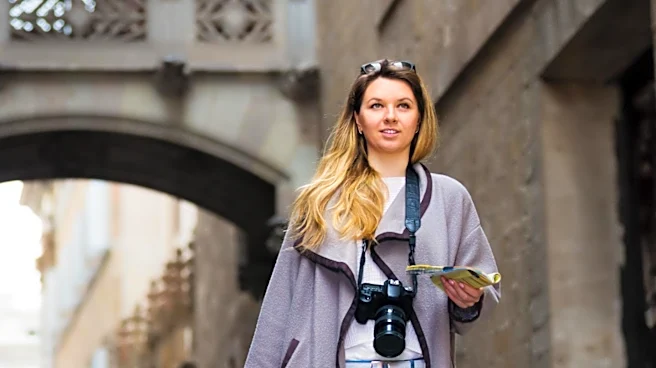
Fashion experts have identified distinct style choices that often make American tourists stand out when traveling abroad. According to stylists like Brooke Crum and Anne-Victoire Lefèvre, Americans tend to favor comfort, often opting for athletic wear
such as leggings and baseball caps, which can be perceived as casual or out of place in certain international settings. In Japan, for instance, workout clothes are styled more intentionally, with muted colors and elevated pieces like blazers over jerseys. In Paris, Americans are noted for being too casual during the day and overly dressy in the evening, with women often wearing special-occasion dresses and men sporting polo shirts and chinos. The use of logos on clothing is another giveaway, as locals in places like Paris prefer timeless pieces that can be mixed and matched. Stylists suggest that tourists should aim for neutral colors and less sophisticated outfits to blend in more seamlessly with local fashion norms.
Why It's Important?
Understanding these fashion nuances is crucial for American tourists who wish to integrate more smoothly into foreign cultures and avoid being easily identified as outsiders. This awareness can enhance the travel experience by fostering more authentic interactions with locals and reducing the likelihood of being targeted for tourist scams. Moreover, adopting local fashion styles can be a form of cultural respect, showing an appreciation for the host country's customs and aesthetics. For the fashion industry, these insights highlight the importance of cultural sensitivity and adaptability in design and marketing strategies, potentially influencing how American brands approach international markets.
What's Next?
As American tourists become more aware of these fashion distinctions, there may be a shift towards more culturally sensitive travel attire. Fashion brands could respond by offering collections that cater to travelers seeking to blend in abroad, featuring versatile, neutral pieces that align with international style preferences. Additionally, travel guides and fashion consultants might increasingly offer advice on how to dress appropriately in different cultural contexts, enhancing the overall travel experience. This trend could also lead to collaborations between American and international designers, fostering cross-cultural exchanges in the fashion industry.
Beyond the Headlines
The discussion around American tourist fashion abroad touches on broader themes of cultural exchange and globalization. As travelers become more attuned to local customs, there is potential for deeper cultural understanding and appreciation. This shift could influence not only individual travel experiences but also broader societal attitudes towards international relations and cultural diversity. Furthermore, the fashion industry's role in shaping perceptions and identities highlights the power of clothing as a form of communication and expression, with implications for how cultures interact and influence one another.