
What's Happening?
Kubota has introduced two significant innovations at CES 2026 in Las Vegas, focusing on advancing agricultural technology. The company showcased an autonomous version of its M5 Narrow specialty tractor,
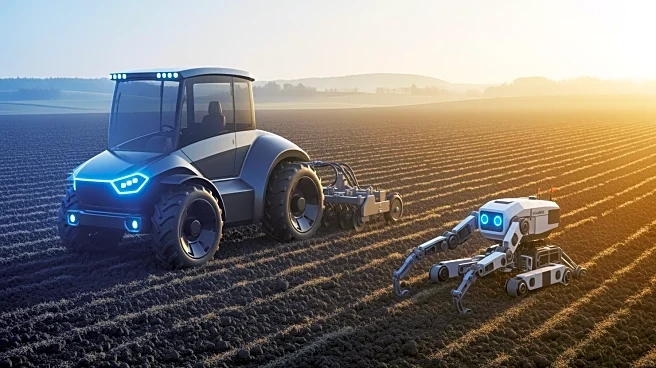
developed in collaboration with the U.S. startup Agtonomy. This tractor is designed for use in orchards and vineyards, integrating advanced sensing and AI to automate tasks such as crop growth sensing and chemical spraying. Additionally, Kubota presented the KVPR 'Transformer' robot, a versatile platform capable of morphing into different machine formats through interchangeable attachments. This robot is intended for diverse applications, including farming and civil engineering, offering features like automatic attachment changes and the ability to move laterally and diagonally. While these innovations promise to enhance efficiency and reduce labor in agriculture, specific details regarding pricing and commercial availability have not been disclosed.
Why It's Important?
The introduction of autonomous agricultural machinery by Kubota represents a significant step forward in the automation of farming processes. By integrating AI and advanced sensing technologies, these innovations aim to optimize agricultural tasks, potentially reducing labor costs and increasing efficiency. This could have a profound impact on the agricultural sector, particularly in specialty crop farming, where precision and efficiency are crucial. The ability to automate tasks such as mowing and under-vine cultivation, as demonstrated by Treasury Wine Estates, highlights the potential for these technologies to improve productivity and reduce the need for manual rework. As the agricultural industry faces challenges such as labor shortages and the need for sustainable practices, Kubota's innovations could provide valuable solutions.
What's Next?
While Kubota has not yet announced specific timelines for the commercial availability of these technologies, the introduction at CES 2026 suggests that further development and testing are likely underway. The agricultural sector and potential customers will be watching closely for updates on pricing and availability. Additionally, the success of these innovations could prompt other companies in the agricultural machinery industry to accelerate their own development of autonomous solutions. As these technologies become more widely adopted, they may lead to broader changes in farming practices and the agricultural labor market.