
What's Happening?
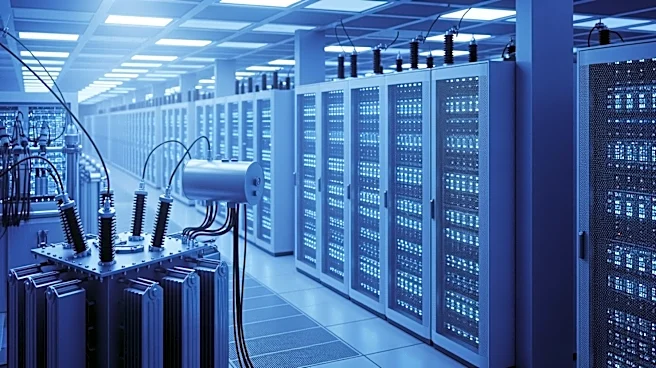
The rapid growth of artificial intelligence (AI) training data centers is presenting significant challenges to power grid stability. These centers, which utilize large numbers of graphical processing units
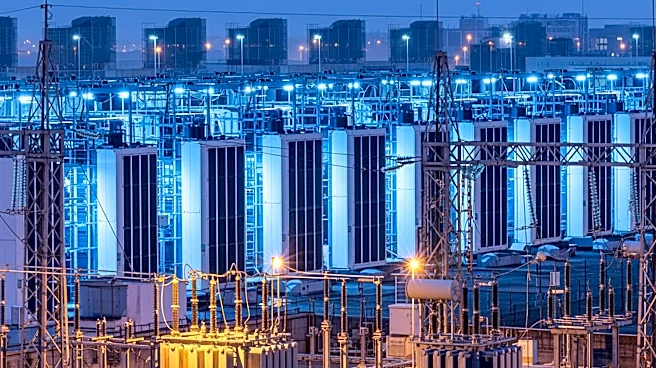
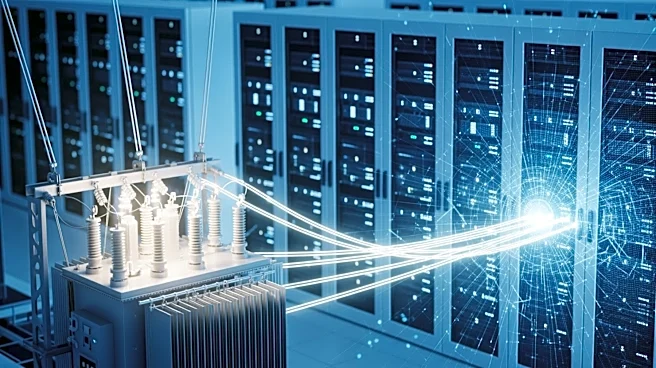
(GPUs) and tensor processing units (TPUs), consume vast and unpredictable amounts of power. This consumption pattern creates instantaneous swings of hundreds of megawatts, which can destabilize both onsite power generation and the broader power grid. Unlike traditional power consumers, AI data centers experience rapid power ramp-ups and drop-offs, leading to frequency spikes and mechanical stress on power generation equipment. To address these challenges, some data centers are using battery energy storage systems (BESS) to buffer power demands and stabilize their load profiles. However, many centers remain reliant on expensive islanded power generation, which is not a sustainable long-term solution.
Why It's Important?
The power demands of AI data centers have significant implications for the U.S. energy sector. As these centers continue to grow, they could pose risks to grid stability, potentially leading to widespread power outages. This situation necessitates new regulatory measures and technological innovations to ensure reliable power supply. The use of BESS and microgrid control systems offers a potential solution by smoothing out power demands and making AI centers more compatible with existing grid infrastructure. However, the high costs associated with islanded power generation and the need for rapid adaptation highlight the urgency for the energy sector to develop more efficient and sustainable power solutions. The ability to effectively integrate AI data centers into the grid will be crucial for maintaining energy reliability and supporting the continued growth of AI technologies.
What's Next?
As the demand for AI data centers continues to rise, utilities and regulators are likely to implement stricter interconnection standards and buffering requirements to manage the impact on the grid. The development of more advanced BESS and microgrid technologies will be essential to accommodate the unique power demands of these centers. Additionally, data center operators may need to invest in generation management software to optimize power usage and reduce costs. The industry will need to balance the immediate need for reliable power with the long-term goal of sustainable and cost-effective energy solutions. Collaboration between data center operators, utilities, and regulators will be key to achieving these objectives and ensuring the stability of the power grid.