








What's Happening?
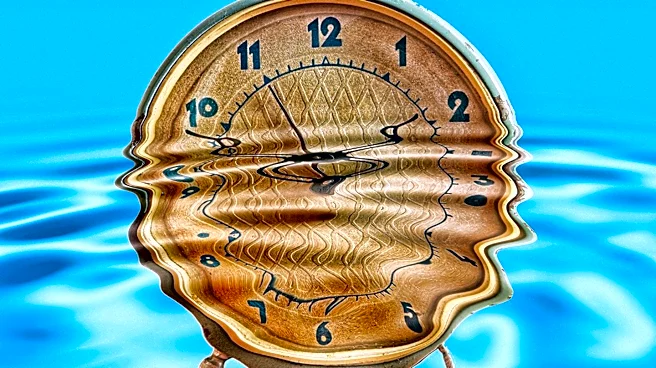
The perception of time speeding up as people age is a phenomenon explored by neuroscientist David Eagleman. He suggests that as individuals grow older, their brains develop more compressed representations of events, leading to impoverished memories. This
contrasts with childhood, where novelty makes memories dense and time seems to pass more slowly. The theory, originally proposed by French philosopher Paul Janet, posits that time appears to accelerate because each year becomes a smaller fraction of one's life. Eagleman adds that familiarity and routine contribute to this sensation, as they result in thinner memories. He argues that introducing novelty or focusing deeply on a single task can create richer memories, making time feel slower.
Why It's Important?
Understanding the perception of time has implications for mental health and well-being. As people age, the sensation of time speeding up can lead to feelings of life passing by too quickly, potentially impacting life satisfaction. Eagleman's insights suggest that by introducing novelty or practicing sustained attention, individuals can enrich their experiences and memories, potentially enhancing their quality of life. This understanding could influence how people choose to spend their time, encouraging activities that promote engagement and mindfulness. It also highlights the importance of mental stimulation and attention in maintaining cognitive health as one ages.
What's Next?
While the article does not specify future steps, the insights provided could lead to further research into cognitive aging and memory. Individuals might be encouraged to seek new experiences or practice mindfulness to counteract the sensation of time speeding up. Additionally, these findings could influence educational and therapeutic practices, promoting activities that enhance attention and novelty to improve cognitive function and life satisfaction.
Beyond the Headlines
The exploration of time perception touches on broader themes of memory, attention, and the human experience. It raises questions about how modern lifestyles, characterized by constant distractions and multitasking, might affect our perception of time and memory formation. The emphasis on novelty and attention could lead to a cultural shift towards valuing deep focus and new experiences, potentially impacting how people approach work, leisure, and personal development.