







What's Happening?
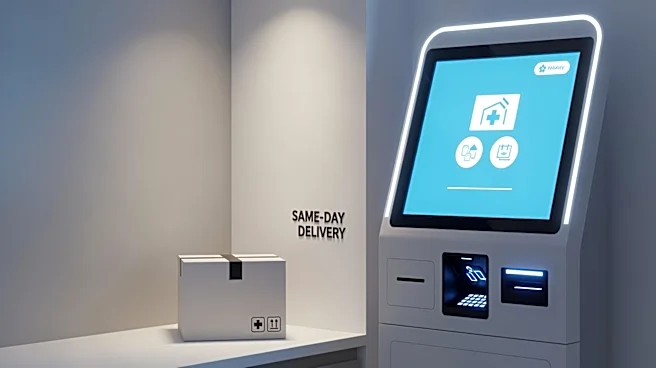
Amazon has announced the integration of Novo Nordisk's Ozempic, a medication for type 2 diabetes, into its self-service kiosks and same-day delivery services. This move is part of Amazon's strategy to enhance its pharmaceutical business by providing a seamless
process from consultation to medication pickup and repurchase. Customers with prescriptions can now order Ozempic at these kiosks, with prices starting at $25 per month for insured users and $149 for cash payments. The same-day delivery service is currently available in approximately 3,000 cities and towns, with plans to expand to 4,500 by the end of the year. This initiative is expected to improve prescription conversion rates, refill rates, and user retention by making chronic disease medications more accessible and affordable.
Why It's Important?
This development marks a significant step in Amazon's evolution from a drug delivery service to a comprehensive healthcare retail infrastructure. By integrating Ozempic into its self-service kiosks and delivery network, Amazon is enhancing its competitive edge in the chronic disease medication market. The move is likely to attract more users by offering competitive pricing, accessibility, and delivery speed. For Amazon, this strategy not only strengthens its pharmaceutical business but also creates a synergistic relationship with One Medical, transforming it into a key entry point for Amazon's healthcare services. This could lead to increased user retention and the bundling of pharmacy, membership, delivery, and medical services into a cohesive system.
What's Next?
Amazon's investment in expanding its delivery capabilities, including a $4 billion investment this year, suggests a focus on reaching more small towns and rural areas. If successful, this expansion could position Amazon's pharmaceutical business as a high-frequency, essential growth sector with strong repurchase rates. The company aims to replicate this model across more drugs and medical scenarios, potentially transforming its pharmaceutical services into a major component of its business portfolio. The success of this initiative could influence other companies in the healthcare and retail sectors to adopt similar strategies, further reshaping the landscape of pharmaceutical distribution.