


What's Happening?
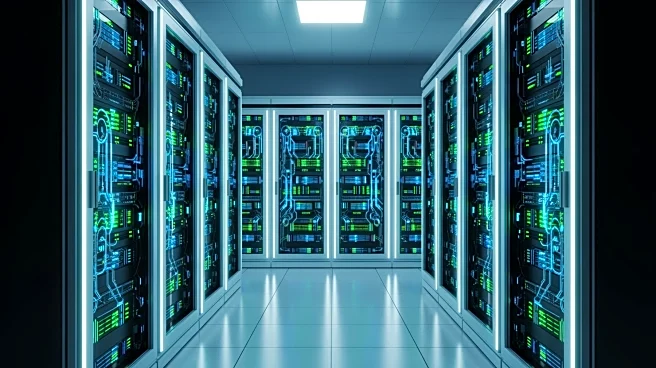
Bitcoin mining companies are adapting to profitability challenges by transitioning into AI data centers. The volatility in Bitcoin prices and increased mining difficulty have led to higher production costs, with direct costs averaging $74,600 per Bitcoin and total costs, including indirect expenses, reaching $130,000. This has resulted in a 'reverse margin' where the cost of production exceeds the current market price of Bitcoin, which fluctuates between $90,000 and $100,000. To counteract these financial pressures, companies like Core Scientific are leveraging their existing power infrastructure and high-performance computing resources to pivot towards AI data center operations. This shift is driven by the growing demand for data centers from
big tech companies, fueled by the rise of generative AI technologies such as ChatGPT. Core Scientific, for instance, has successfully transitioned from near bankruptcy to operating a 200MW AI data center, with plans to expand further.
Why It's Important?
The transition of Bitcoin mining companies to AI data centers represents a significant shift in the industry, highlighting the need for adaptability in the face of economic pressures. This move not only helps these companies stabilize their cash flow but also contributes to the broader tech industry's infrastructure needs. By repurposing their existing resources, these companies can generate stable revenue through long-term contracts, reducing their exposure to the volatile cryptocurrency market. This strategy also alleviates the pressure to sell Bitcoin at low prices, which can depress market values. The shift to AI data centers could improve the financial health of these companies and potentially stabilize the cryptocurrency market by reducing the frequency of forced Bitcoin sales.
What's Next?
As more Bitcoin mining companies adopt this hybrid model, the industry may see a trend towards diversification, with firms balancing traditional mining operations with data center services. This could lead to increased investment in AI and cloud infrastructure, further integrating these companies into the tech ecosystem. Additionally, regulatory developments, particularly in regions like New York State, may influence the pace and nature of this transition. Companies will need to navigate these regulatory landscapes while continuing to innovate and expand their service offerings. The success of early adopters like Core Scientific could serve as a blueprint for others in the industry, potentially leading to a broader transformation of the Bitcoin mining sector.
Beyond the Headlines
The shift from Bitcoin mining to AI data centers raises questions about the future of energy consumption and environmental impact. While the transition leverages existing infrastructure, the energy demands of AI data centers remain significant. Companies may need to explore sustainable energy sources to mitigate environmental concerns. This evolution also reflects a broader trend of technological convergence, where industries traditionally seen as separate begin to overlap, creating new business models and opportunities. The ability of these companies to adapt and thrive in this new landscape could influence the future direction of both the cryptocurrency and tech industries.