


What's Happening?
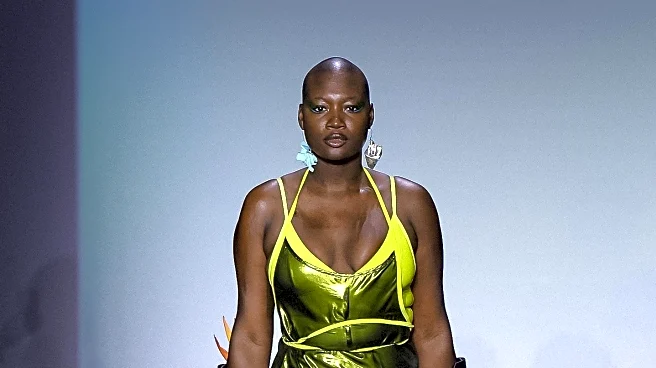
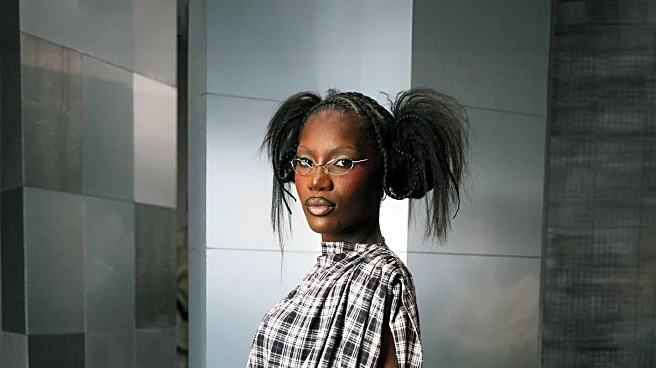
The London fashion week has witnessed a resurgence of body diversity on the runway, despite a broader industry trend towards ultra-thin models. Designers like Karoline Vitto, Phoebe English, and Sinead Gorey showcased a variety of body shapes, ranging
from mid-size to plus-size models. This move counters the recent decline in size inclusivity, as reported by Vogue Business, which noted that plus-size models accounted for only 0.9% of catwalk appearances in major fashion weeks last year. Karoline Vitto, a Brazilian designer, emphasized the importance of representing diverse body types, choosing models that reflect her brand's size range from UK8 to UK22. The show featured 23 size-diverse models, some of whom covered their own costs to participate, highlighting the financial constraints faced by emerging designers.
Why It's Important?
The return of body diversity in fashion is significant as it challenges the prevailing norms of thinness that have dominated the industry. This shift is crucial for promoting inclusivity and representation, offering a broader range of body types for consumers to identify with. The trend towards ultra-thin models has been linked to cultural influences, including the use of weight loss drugs like GLP-1. By showcasing diverse body types, designers like Vitto are pushing back against these norms, potentially influencing larger fashion houses to reconsider their casting choices. This movement could lead to a more inclusive fashion industry, impacting consumer perceptions and encouraging brands to cater to a wider audience.
What's Next?
The push for body diversity is likely to continue as emerging designers advocate for change. However, significant shifts will require support from major fashion houses, which set industry standards. If luxury brands embrace inclusivity, it could create a ripple effect, encouraging more designers to follow suit. Additionally, the financial challenges faced by smaller brands in casting diverse models may prompt discussions on how the industry can better support inclusivity efforts. As the conversation around body diversity grows, it may also influence other sectors, such as media and advertising, to adopt more inclusive practices.
Beyond the Headlines
The emphasis on body diversity in fashion highlights broader societal issues related to body image and self-acceptance. The fashion industry's portrayal of beauty standards has long influenced public perceptions, often contributing to unrealistic body ideals. By promoting diverse body types, designers are challenging these ideals and fostering a culture of acceptance and empowerment. This shift could have long-term cultural implications, encouraging individuals to embrace their unique body shapes and sizes. Furthermore, the movement towards inclusivity in fashion may inspire other industries to prioritize diversity and representation, leading to more equitable and inclusive practices across various sectors.