


What's Happening?
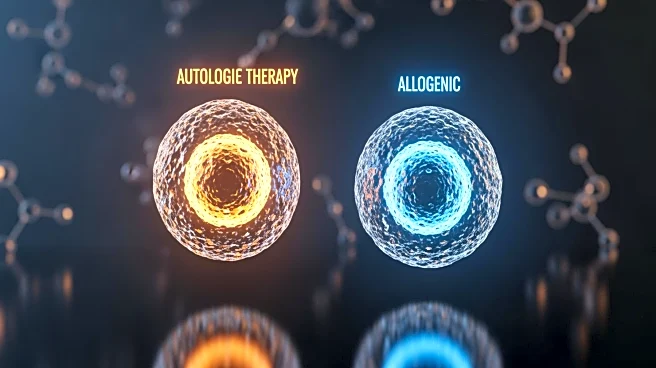
Unexakorea, a company specializing in healthcare and nutraceuticals, is at the forefront of advancing NK cell therapeutics, focusing on both autologous and allogeneic approaches. NK cells, known as the frontline warriors of the innate immune system, are being developed to provide potent and safe anticancer solutions. The autologous approach uses the patient's own blood, offering a high safety profile with no risk of rejection, but it requires a wait time for culture and can be costly due to bespoke production. In contrast, the allogeneic approach uses cells from healthy donors, providing immediate 'off-the-shelf' administration and lower costs through mass production, though it carries a risk of graft-versus-host disease (GvHD) or rejection without
editing. Unexakorea is leveraging its research and development capabilities to make advanced biotechnology accessible, aiming to create a sustainable wellness model that benefits society.
Why It's Important?
The development of NK cell therapeutics by Unexakorea represents a significant advancement in cancer treatment, moving beyond symptom management to addressing the fundamentals of health through cellular engineering. This innovation has the potential to transform the healthcare industry by providing more effective and safer cancer treatments. The choice between autologous and allogeneic approaches highlights the ongoing debate in the industry regarding clinical efficacy and economic viability. The success of these therapies could lead to a healthier and more prosperous future, reducing the burden of cancer on patients and healthcare systems. Additionally, Unexakorea's focus on sustainable biotechnology and its efforts to make these therapies widely accessible could democratize advanced healthcare solutions, impacting public health positively.
What's Next?
As Unexakorea continues to develop its NK cell therapeutics, the next steps involve further research and clinical trials to optimize these therapies for commercialization. The company aims to establish a structural health infrastructure that supports long-term generational strategies based on science. This includes advancing sustained-release formulation manufacturing technology and exploring microbiome research to enhance the efficacy and accessibility of their products. The industry will be closely watching how Unexakorea navigates the challenges of bringing these therapies to market, particularly in balancing cost, safety, and efficacy. Stakeholders, including healthcare providers, patients, and regulatory bodies, will play crucial roles in the adoption and integration of these innovative treatments into standard care practices.