
What's Happening?
Intel Corporation has announced significant leadership changes to bolster its client computing and AI innovation efforts. Alex Katouzian has been appointed as the executive vice president and general manager
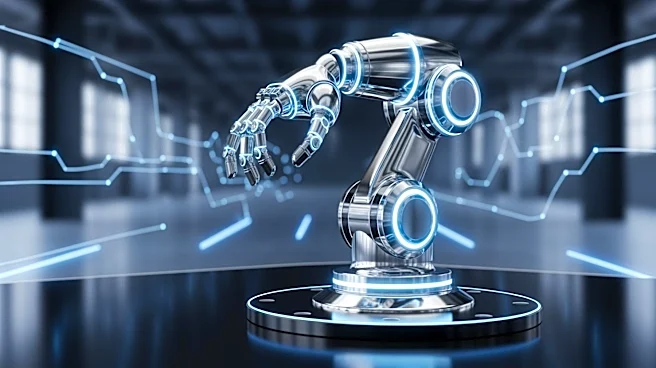
of the Client Computing and Physical AI Group. In his new role, Katouzian will focus on aligning Intel's client computing business with emerging physical AI systems, which include robotics and autonomous machines. Previously, Katouzian served as an executive vice president at Qualcomm Technologies, where he was recognized for his technical vision and ability to scale global compute platforms. Additionally, Pushkar Ranade has been named the chief technology officer, transitioning from an interim role. Ranade will lead Intel's technology strategy, focusing on areas such as quantum computing and neuromorphic computing. Both Katouzian and Ranade will report directly to Intel CEO Lip-Bu Tan.
Why It's Important?
These leadership appointments are crucial for Intel as it seeks to strengthen its position in the rapidly evolving fields of client computing and AI. By bringing in experienced leaders like Katouzian, Intel aims to enhance its capabilities in AI-driven transformation, which is becoming increasingly important in the tech industry. The focus on physical AI systems and emerging technologies like quantum computing indicates Intel's commitment to staying at the forefront of innovation. This strategic move could potentially lead to new products and services that cater to the growing demand for AI and computing solutions, impacting various sectors including robotics, autonomous vehicles, and more.
What's Next?
With these new appointments, Intel is expected to accelerate its efforts in developing next-generation computing experiences. The company will likely focus on integrating AI more deeply into its product offerings, which could lead to advancements in AI PCs and edge computing solutions. Stakeholders, including investors and industry partners, will be watching closely to see how these leadership changes translate into tangible innovations and market performance. The success of these initiatives could influence Intel's competitive standing against other tech giants in the AI and semiconductor industries.