



What's Happening?
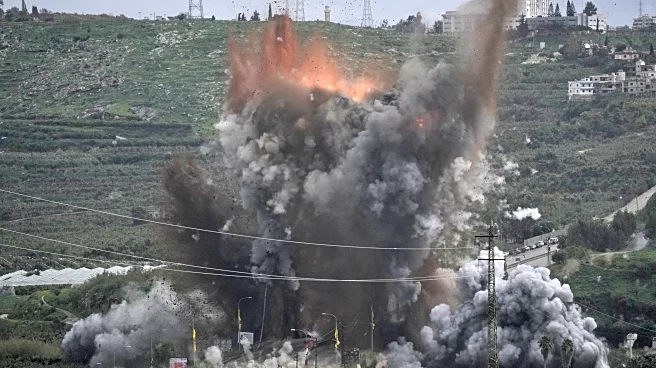
Gas prices in the United States have risen significantly due to the ongoing conflict in Iran, which began with a joint military operation by the U.S. and Israel. The disruption of oil flow through the Strait of Hormuz, a critical shipping route, has led
to increased global oil prices. As a result, gas prices have surpassed $3 per gallon in all 50 states for the first time since 2023. The average increase in gas prices across the U.S. is 31.03% over the past month, with some states experiencing even higher spikes.
Why It's Important?
The rise in gas prices is a direct consequence of geopolitical tensions and highlights the vulnerability of global oil markets to regional conflicts. This increase affects consumers and businesses alike, leading to higher transportation and production costs. The situation underscores the importance of energy security and the potential benefits of diversifying energy sources to reduce dependency on volatile regions. The economic impact of rising gas prices could also influence inflation rates and consumer spending, affecting the broader U.S. economy.
What's Next?
If the conflict in Iran continues, gas prices may remain elevated, prompting further economic strain on consumers and businesses. Policymakers may need to consider measures to mitigate the impact, such as releasing strategic oil reserves or accelerating the transition to alternative energy sources. The situation may also lead to increased discussions on energy policy and the need for greater energy independence.