

What's Happening?
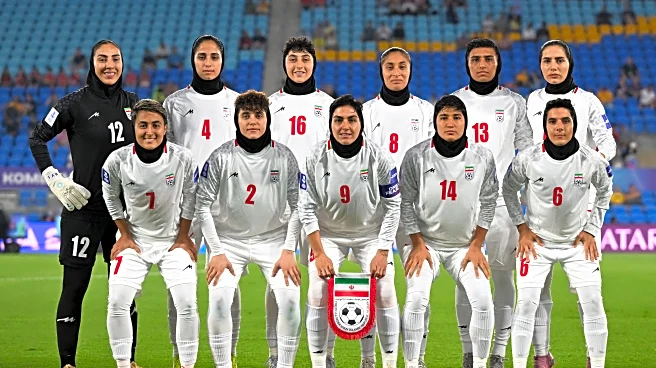
FIFPRO, the global representative organization for professional footballers, has urged FIFA and the Asian Football Confederation (AFC) to protect the Iran women's national football team. This call comes after the team was labeled 'wartime traitors' by
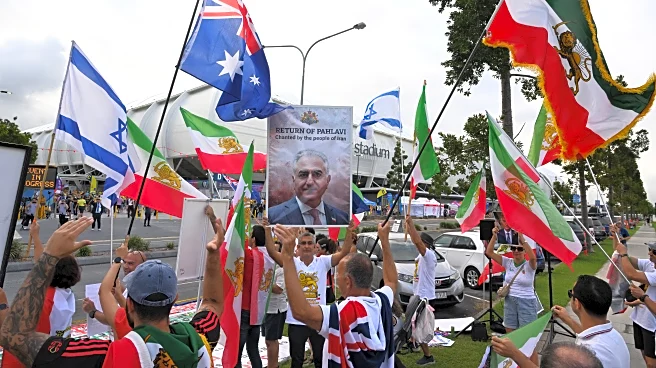
an Iranian state television presenter for not singing the national anthem at the opening match of the AFC Cup. The players stood in silence during the anthem before their match against South Korea, which they lost 3-0. The presenter, Mohammad Reza Shahbazi, criticized the players' actions as a lack of patriotism and called for severe measures against them. FIFPRO has expressed deep concern for the players' safety, especially if they return to Iran after the tournament. The organization has urged FIFA and AFC to engage with relevant authorities, including the Iranian Football Association and the Australian Government, to ensure the players' safety.
Why It's Important?
The situation highlights the intersection of sports and politics, where athletes can face significant risks due to political tensions. The Iranian women's football team is under scrutiny for their silent protest, which has been interpreted as a political statement. This incident underscores the challenges athletes face when their actions are perceived as political, especially in countries with strict governmental controls. The call for protection by FIFPRO emphasizes the need for international sports organizations to uphold human rights and protect athletes from political repercussions. The outcome of this situation could set a precedent for how sports bodies handle similar issues in the future, impacting the safety and freedom of expression for athletes worldwide.
What's Next?
FIFPRO has called for urgent engagement with the Iranian Football Association and other authorities to ensure the players' safety. The Iranian team is scheduled to play against the Philippines in their final group match. The response from FIFA and AFC will be crucial in determining the immediate safety of the players and could influence future policies regarding athlete protection. The international community, including human rights organizations, may also weigh in, potentially leading to broader discussions on the role of sports in political expression and human rights advocacy.
Beyond the Headlines
This incident raises questions about the role of sports in political expression and the responsibilities of international sports organizations in protecting athletes. The silent protest by the Iranian players can be seen as a form of political expression, challenging the norms in a country where dissent is often met with severe consequences. The situation also highlights the broader issue of athletes' rights and the need for sports bodies to navigate complex political landscapes while ensuring the safety and freedom of their members. The response from FIFA and AFC could influence how similar situations are handled in the future, potentially leading to changes in policies regarding athlete protection and political expression.