
What's Happening?
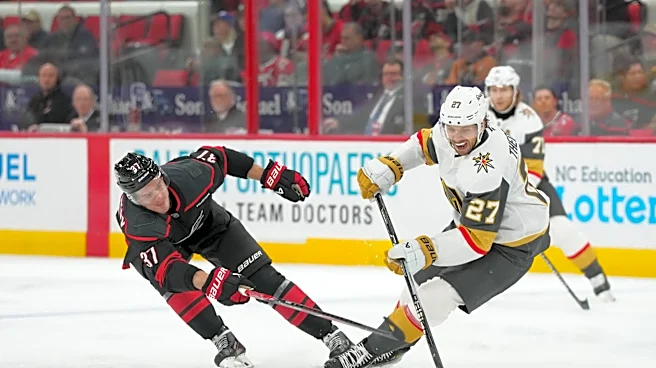
In the NHL, the Vegas Golden Knights and the Carolina Hurricanes have both chosen not to touch their conference finals trophies this season, a decision rooted in superstition. Traditionally, teams are
divided on whether to celebrate by touching the trophy or to avoid it in hopes of winning the Stanley Cup. This year, both teams opted for the latter, following a belief that not touching the trophy might increase their chances of winning the ultimate prize. Historically, the Golden Knights celebrated their first conference title by touching the trophy but lost the Stanley Cup. In contrast, they avoided touching it in a more recent season and went on to win the Stanley Cup. Similarly, the Hurricanes have experienced both outcomes, losing after touching the trophy and winning after avoiding it. This shared decision by both teams has sparked discussions on social media about the impact of such superstitions.
Why It's Important?
The decision by the Golden Knights and Hurricanes highlights the role of superstition in sports, particularly in high-stakes competitions like the NHL playoffs. Superstitions can influence team morale and fan engagement, adding an extra layer of intrigue to the games. For the teams, these rituals can serve as psychological tools, potentially boosting confidence or reducing pressure. For fans, they offer a narrative that enhances the emotional investment in the games. The broader significance lies in how these traditions shape the culture of sports, affecting everything from team strategies to fan interactions. While there is no scientific correlation between touching the trophy and winning the Stanley Cup, the belief in such superstitions persists, demonstrating the powerful role of tradition and psychology in sports.
What's Next?
As the NHL playoffs progress, the focus will shift to whether the decision not to touch the conference finals trophies will have any impact on the outcomes for the Golden Knights and Hurricanes. Both teams are now in pursuit of the Stanley Cup, and their adherence to this superstition will be closely watched by fans and analysts alike. Should one of these teams win the Stanley Cup, it may reinforce the belief in this particular superstition, potentially influencing future teams' decisions. Conversely, if neither team wins, it could challenge the validity of such rituals. The outcome will likely contribute to ongoing debates about the role of superstition in sports and whether it truly affects performance.