
What's Happening?
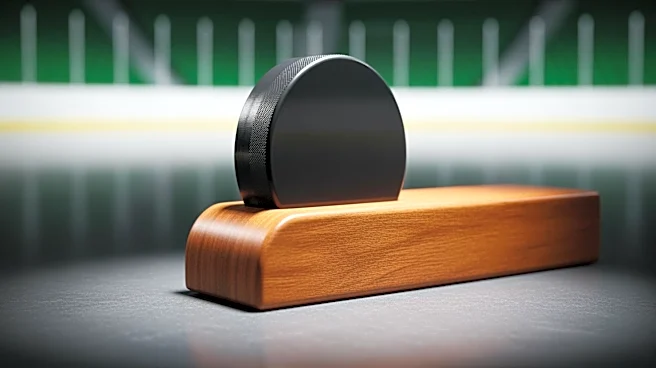
The Minnesota Wild have introduced a unique Stanley Cup-shaped puck holder crafted by fan and season ticket holder Matthew Lange. This wooden creation, designed to hold 16 pucks representing the wins needed to secure the Stanley Cup, was inspired by Lange's
earlier work with charcuterie boards featuring the Wild's logo. The puck holder has become a symbol of team spirit and superstition, replacing the Redwood Hat as the team's playoff talisman. Lange, who started woodworking as a hobby, has seen his creations gain popularity, especially after a shoutout from player Marcus Foligno during a postgame interview. The puck holder is now a part of the team's playoff journey, with players placing pucks in it after each victory.
Why It's Important?
This development highlights the strong connection between sports teams and their fan base, showcasing how fan engagement can enhance team morale and create unique traditions. The puck holder serves as a motivational tool for the Wild, embodying the collective aspirations of the team and its supporters. Such fan-driven initiatives can foster a deeper sense of community and loyalty, potentially influencing team performance positively. Additionally, it underscores the role of social media in amplifying fan contributions, as Lange's woodworking gained traction through online platforms, further integrating fans into the team's narrative.
What's Next?
As the playoffs progress, the Wild will continue to use the puck holder as a motivational symbol. Should the team advance further, the holder will become a cherished artifact of their playoff journey. The Wild's engagement with fans like Lange may inspire other teams to explore similar collaborations, enhancing fan involvement in creative ways. If the Wild succeed in filling the puck holder with victory pucks, it could become a permanent fixture in the team's history, possibly displayed in a glass case or returned to Lange as a token of appreciation.
Beyond the Headlines
This story reflects broader cultural trends where fans are increasingly becoming active participants in sports narratives, rather than passive observers. The integration of fan-made items into team rituals highlights a shift towards more personalized and community-driven sports experiences. It also raises questions about the commercialization of fan contributions and how teams can balance authenticity with marketing opportunities. The Wild's embrace of Lange's creation could set a precedent for other teams to follow, potentially leading to a new era of fan engagement in professional sports.