
What's Happening?
A recent review of industry financial documents reveals that CEOs of the top U.S. utility companies received an average pay raise of 16% last year, bringing their average compensation to $12.3 million.
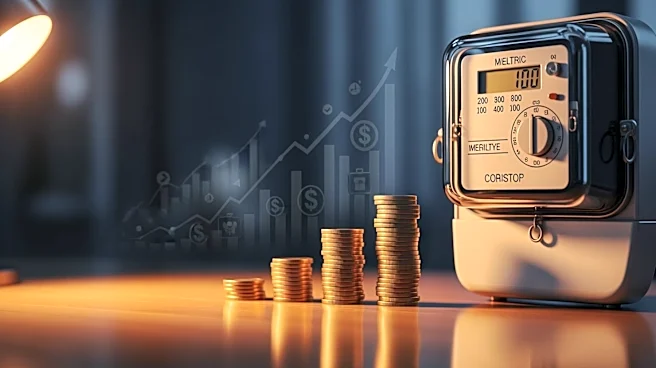
This increase comes as consumers face significant hikes in utility bills, with some regions experiencing up to a 40% rise since 2021. The Energy and Policy Institute (EPI) found that 38 out of 51 top utility CEOs received pay raises, totaling $82 million collectively. Despite the financial strain on consumers, utility companies shut off power to customers 13 million times last year. The report highlights that CEO compensation has risen 47% on average since 2017, outpacing inflation and worker pay. The analysis also points out that some executives received pay raises despite failing to meet performance standards, including for outages.
Why It's Important?
The significant pay raises for utility CEOs amid rising consumer bills highlight a growing disparity between executive compensation and consumer affordability. This situation underscores the challenges faced by consumers who are already burdened by inflation and increased living costs. The rising utility bills are a major driver of continuing inflation, affecting household budgets across the nation. The lack of regulatory oversight and the structure of utility companies as regulated monopolies limit consumer options and accountability. This scenario raises questions about the fairness and sustainability of current compensation practices in the utility sector, especially as consumers struggle with affordability and service reliability.
What's Next?
Regulatory and governmental actions may be necessary to address the growing concerns over executive compensation and consumer affordability in the utility sector. Some states, like Maryland, have already passed legislation to limit CEO pay relative to public utility commission chairs. Similar proposals are being considered in other states, including Michigan. As public awareness and dissatisfaction grow, there may be increased pressure on regulators and policymakers to implement measures that ensure fairer compensation practices and protect consumers from excessive utility costs.