

What's Happening?
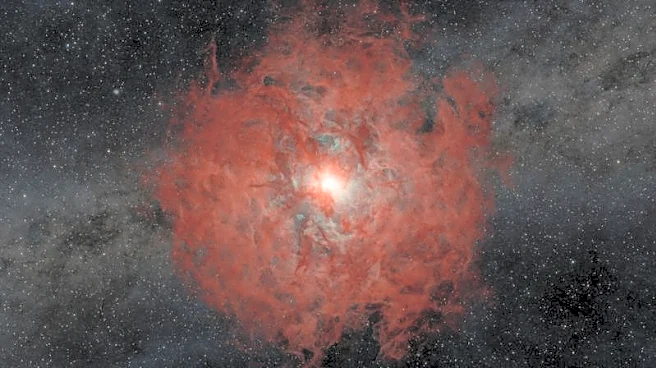
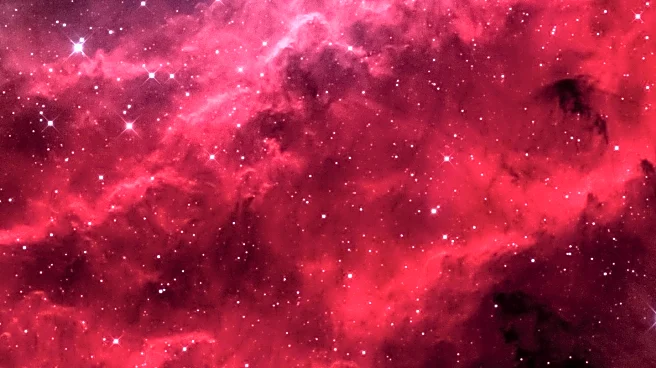
On Valentine's Day, skywatchers have the opportunity to observe the Heart Nebula (IC 1805) in the constellation Cassiopeia. This star-forming region, known for its distinctive heart shape, is best viewed in the early evening when the sky is dark and the Moon is not visible. The nebula is located near the familiar W shape of Cassiopeia, appearing as a large emission region surrounding the young star cluster Melotte 15. Nearby, the Soul Nebula (IC 1848) adds to the celestial display, making the pair a popular target for astrophotographers.
Why It's Important?
The visibility of the Heart Nebula on Valentine's Day provides a unique opportunity for both amateur and professional astronomers to engage with the night sky. Such celestial events can inspire interest in astronomy
and science, encouraging educational activities and public outreach. The Heart Nebula's appearance also highlights the beauty and complexity of star-forming regions, offering insights into stellar evolution and the dynamics of interstellar space. This event underscores the importance of preserving dark skies for astronomical observation and research.