





What's Happening?
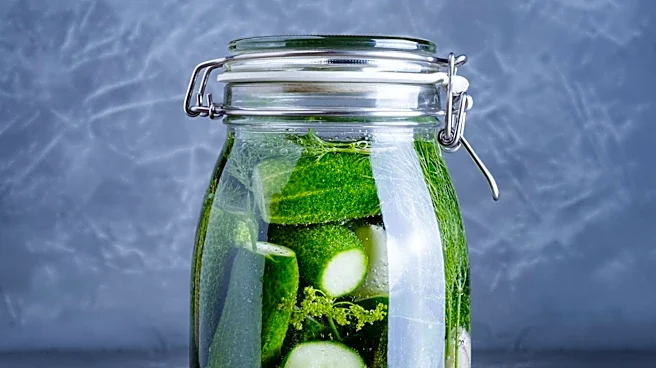
International Pickle Day, celebrated on May 16, has evolved from a niche observance into a significant cultural event, highlighting the growing popularity of pickle flavors in the U.S. food and beverage industry. This year, the trend is marked by the introduction
of pickle-flavored products in various forms, including smoothies and beers. Smoothie King is offering a free sample of its new Pickle Smoothie, developed in collaboration with Grillo's Pickles, which combines real pickle ingredients with electrolytes and a fruit base. This product is part of a broader trend where pickle juice is being used as a functional ingredient in beverages. Additionally, Pabst Blue Ribbon has teamed up with Grillo's to create a limited-edition pickle beer, which has gained significant attention online. The trend is further exemplified by the Picklesburgh festival in Pittsburgh, which celebrates all things pickled and has been recognized as a top specialty food festival in the country.
Why It's Important?
The rise of pickle-flavored products reflects a broader shift in consumer preferences towards bold and unconventional flavors. This trend is significant for the U.S. food and beverage industry as it opens new avenues for product innovation and marketing strategies. Companies are leveraging the unique taste profile of pickles to create novel products that appeal to adventurous consumers. The collaboration between major brands like Smoothie King and Pabst Blue Ribbon with Grillo's Pickles indicates a strategic move to capitalize on this growing interest. The popularity of pickle-themed events like Picklesburgh also highlights the potential for community engagement and tourism, as such festivals attract large crowds and boost local economies. Overall, the pickle trend underscores the dynamic nature of consumer tastes and the industry's ability to adapt and innovate in response.
What's Next?
As the pickle trend continues to gain momentum, more brands are likely to experiment with pickle flavors in their product lines. This could lead to an increase in limited-edition releases and collaborations, as companies seek to capture consumer interest and differentiate themselves in a competitive market. The success of pickle-themed events and products may inspire similar trends with other unconventional flavors, further diversifying the food and beverage landscape. Additionally, the ongoing popularity of pickle flavors could influence culinary trends, encouraging chefs and restaurants to incorporate pickled ingredients into their menus. The industry's response to this trend will likely involve a combination of product innovation, marketing campaigns, and strategic partnerships to sustain consumer interest and drive sales.