






What's Happening?
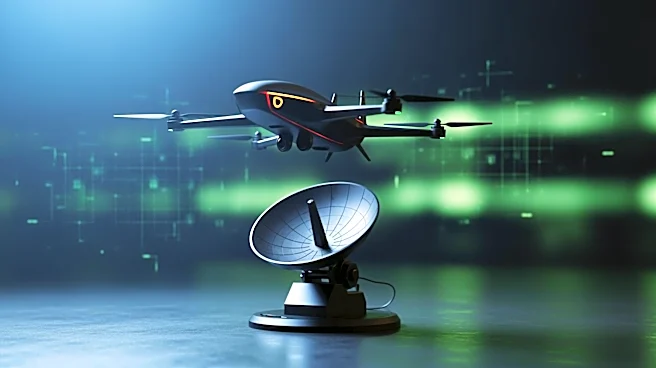
DroneShield and Terma have entered into a Memorandum of Understanding (MoU) to collaborate on counter unmanned aircraft systems (C-UAS). The agreement, announced on May 4, 2026, focuses on developing a framework for validation, interoperability, and complementary
C-UAS capabilities. Both companies will contribute their expertise in AI-enabled UAS detection, electronic warfare systems, and command and control software. Terma, known for its air defense technologies, will also bring its capabilities to the partnership. This collaboration follows Terma's acquisition of UK-based Operational Solutions Ltd (OSL) in November 2025, a company specializing in C-UAS. OSL's systems have been deployed for critical infrastructure protection, including at Norway's Evenes Air Station. DroneShield has also announced plans to establish a C-UAS manufacturing operation in an unnamed EU country, with deliveries expected to begin in mid-2026.
Why It's Important?
The collaboration between DroneShield and Terma is significant as it addresses the growing need for advanced counter-UAS technologies amid increasing drone threats. The partnership aims to enhance the capabilities of both companies in detecting and neutralizing unauthorized drones, which pose risks to national security and critical infrastructure. By combining their technologies, the companies can offer more robust solutions to governments and organizations worldwide. This development is particularly relevant as the use of drones continues to expand in both civilian and military contexts, necessitating effective countermeasures. The establishment of a manufacturing operation in Europe also highlights the strategic importance of the region in the global defense market.
What's Next?
The next steps for DroneShield and Terma involve the implementation of their MoU, focusing on the integration and testing of their combined C-UAS technologies. As the manufacturing operation in Europe progresses, the companies will likely begin production and delivery of their systems by mid-2026. This collaboration may also lead to further partnerships or acquisitions as both companies seek to expand their market presence and technological capabilities. Stakeholders, including government agencies and defense contractors, will be closely monitoring the outcomes of this partnership to assess its impact on the global C-UAS market.