





What's Happening?
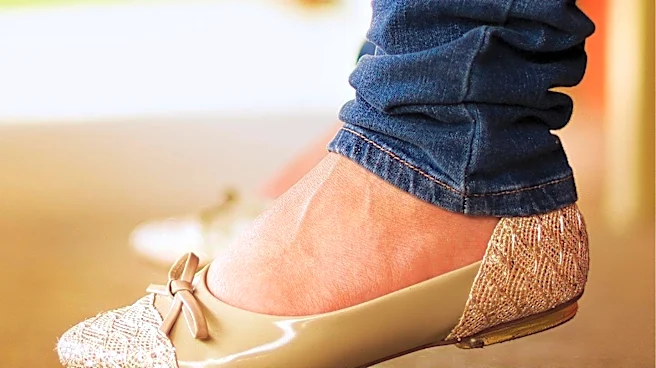
Podiatrists are raising concerns about the potential health risks associated with wearing ballet flats. According to Dr. Anne Sharkey, these shoes often lack arch support, cushioning, and have thin soles, which can lead to various foot problems such as arch collapse,
chronic heel pain, and stress fractures. Dr. Adenike Sonaike and Dr. Suzanne Fuchs also highlight that ballet flats provide insufficient support, potentially overloading the plantar fascia. The narrow, pointy design of some ballet flats can exacerbate issues by forcing toes into unnatural positions, contributing to bunions and hammertoes. Experts advise that proper shoe fit and construction are crucial, emphasizing the importance of a firm heel counter, adequate arch support, and a wide toe box.
Why It's Important?
The advice from podiatrists is significant as it challenges the common perception that ballet flats are a safe and comfortable footwear choice. The potential health risks associated with these shoes could impact a large segment of the population who wear them regularly for their style and convenience. The warnings highlight the importance of choosing footwear that supports foot health, which can prevent long-term structural damage and pain. This information is particularly relevant for consumers who may prioritize fashion over function, as it underscores the need for awareness about the potential consequences of poor footwear choices.
What's Next?
Consumers may need to reconsider their footwear choices, especially those who frequently wear ballet flats. Podiatrists suggest regular foot measurements to ensure proper shoe fit and recommend rotating shoes to avoid wearing the same pair daily. As awareness grows, there could be a shift in consumer behavior towards more supportive footwear options. Additionally, shoe manufacturers might respond by designing ballet flats with improved support features to meet consumer demand for both style and comfort.
Beyond the Headlines
The discussion around ballet flats and foot health also touches on broader themes of consumer education and the fashion industry's responsibility to prioritize health in design. As more people become aware of the potential risks, there may be increased demand for transparency in shoe construction and materials. This could lead to a cultural shift where consumers are more informed and make footwear choices based on health benefits rather than solely on aesthetics.