
What's Happening?
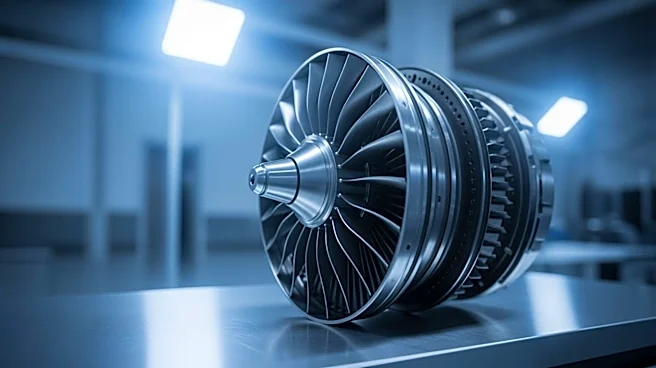
Pratt & Whitney has received a partial exemption from the Federal Aviation Administration (FAA) regarding a key certification test for its PW4000 engine redesign. This exemption pertains to the fan-blade out test required under 14 CFR Part 33.94, which
ensures that a blade failure at the root does not lead to an engine fire or mounting attachment failure. The exemption allows Pratt & Whitney to use modeling instead of physical tests to demonstrate compliance, provided the new design addresses safety concerns identified in past incidents. These incidents, occurring between 2018 and 2020, involved fan blade fractures due to fatigue cracking, which led to debris impacting the airframe and wings. The FAA's decision follows a series of events that highlighted previously unrecognized risks, including an engine fire in 2021, which resulted in the grounding of certain Boeing 777 aircraft.
Why It's Important?
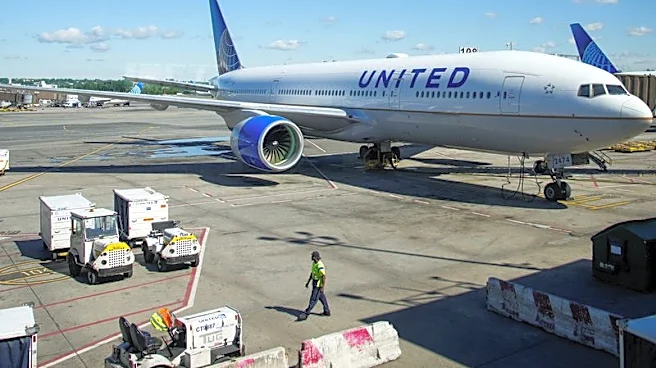
The FAA's decision to grant a partial exemption is significant as it impacts the aviation industry's approach to safety and certification processes. By allowing Pratt & Whitney to use modeling for compliance, the FAA acknowledges the potential for advanced simulation techniques to ensure safety without the need for extensive physical testing. This decision could influence future regulatory practices and the development of new technologies in aviation. The redesign of the PW4000 engine is crucial for restoring confidence in affected aircraft, particularly for United Airlines, the primary operator of the grounded Boeing 777s. The exemption also underscores the importance of addressing latent safety issues that were not apparent during initial certification, potentially leading to more rigorous safety evaluations in the future.
What's Next?
Pratt & Whitney must now demonstrate that its redesigned engine meets the FAA's containment requirements through modeling. The company will need to ensure that the new design corrects the unsafe conditions identified in previous incidents. The FAA, Boeing, and United Airlines will continue to collaborate on a return-to-service plan, which includes regular inspections and the implementation of design changes. The outcome of this process will be closely monitored by the aviation industry, as it may set a precedent for how similar safety issues are addressed in the future.