






What's Happening?
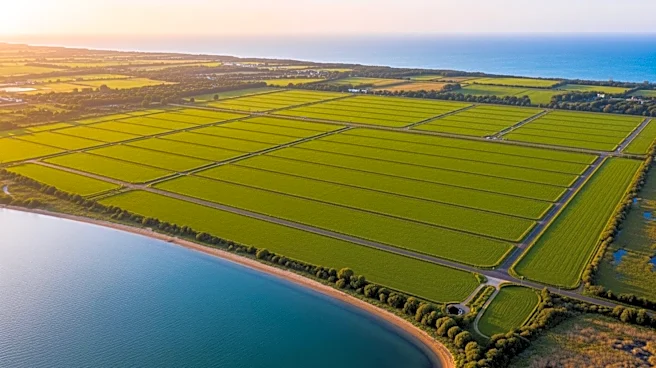
A vacant lot in Manalapan, Florida, has been sold for $105 million in an all-cash transaction, marking the second-largest land sale in the area's history. The property, previously owned by David MacNeil, CEO of WeatherTech, and his spouse Melissa, was
initially listed at $125 million. The couple opted to sell after finding a more appealing $75 million turn-key estate in the same region. This sale highlights the ongoing trend of high-value real estate transactions in Florida, a state that has seen significant growth in its housing market. The new owner of the Manalapan lot, which boasts 342 feet of coastal frontage, has the potential to construct a mansion up to 60,000 square feet, pending town approval. This transaction is part of a broader pattern of increasing real estate values in the U.S., with the average monthly house payment now exceeding $2,000, a 44% increase over the past four years.
Why It's Important?
The sale of the Manalapan lot underscores the robust demand for luxury real estate in Florida, a state that continues to attract high-net-worth individuals. This trend is reflective of broader national patterns where real estate prices have surged, driven by factors such as low mortgage rates and increased demand for spacious properties. The high value of the transaction also highlights the economic disparities in the housing market, where luxury properties continue to appreciate significantly, while first-time homebuyers face challenges due to rising costs. The prevalence of all-cash transactions further indicates a competitive market where buyers with substantial financial resources have a distinct advantage. This dynamic could influence housing policies and market strategies as stakeholders seek to address affordability and accessibility issues.
What's Next?
As the Florida real estate market continues to thrive, it is likely that more high-value transactions will occur, potentially driving further investment in the region. The state's popularity as a relocation destination, evidenced by its dominance in the U-Haul Growth Index, suggests sustained demand for both residential and commercial properties. Real estate developers and investors may increasingly focus on Florida, capitalizing on its growth potential. Additionally, policymakers might need to consider measures to balance the market, ensuring that housing remains accessible to a broader demographic. The ongoing trend of remote work could also influence future real estate developments, as more individuals seek properties that accommodate flexible work arrangements.